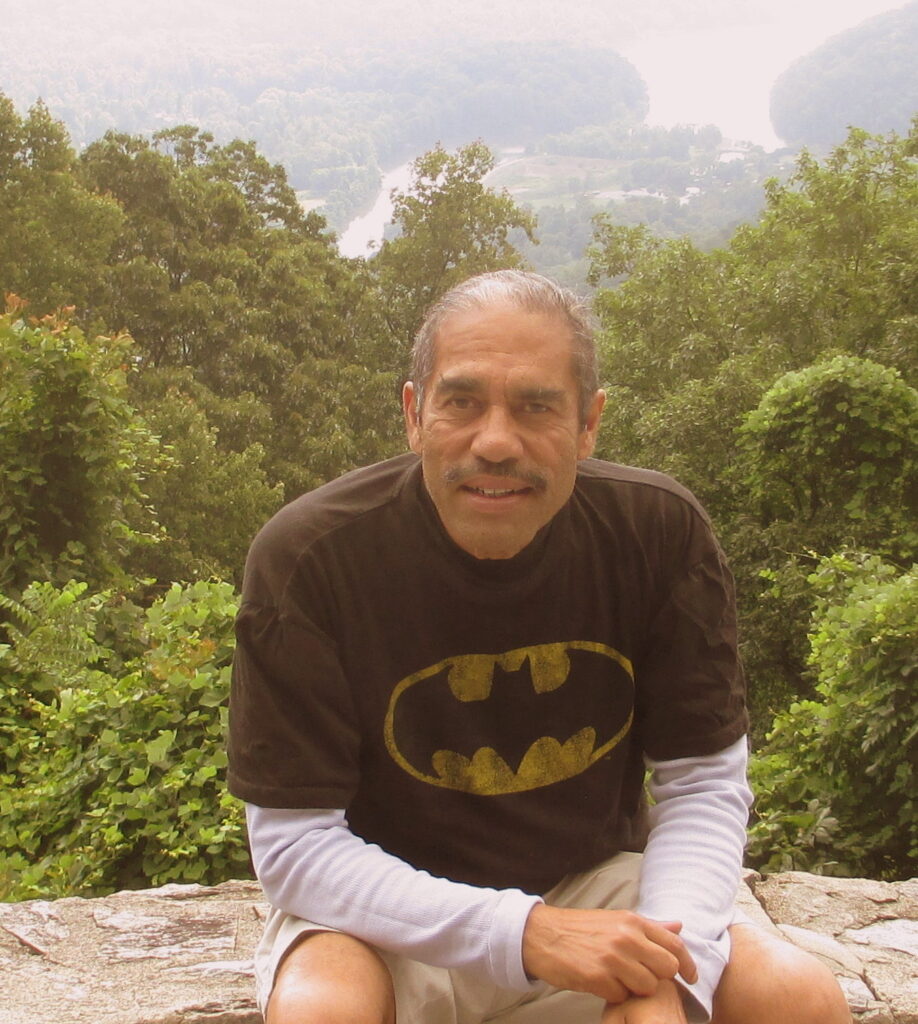
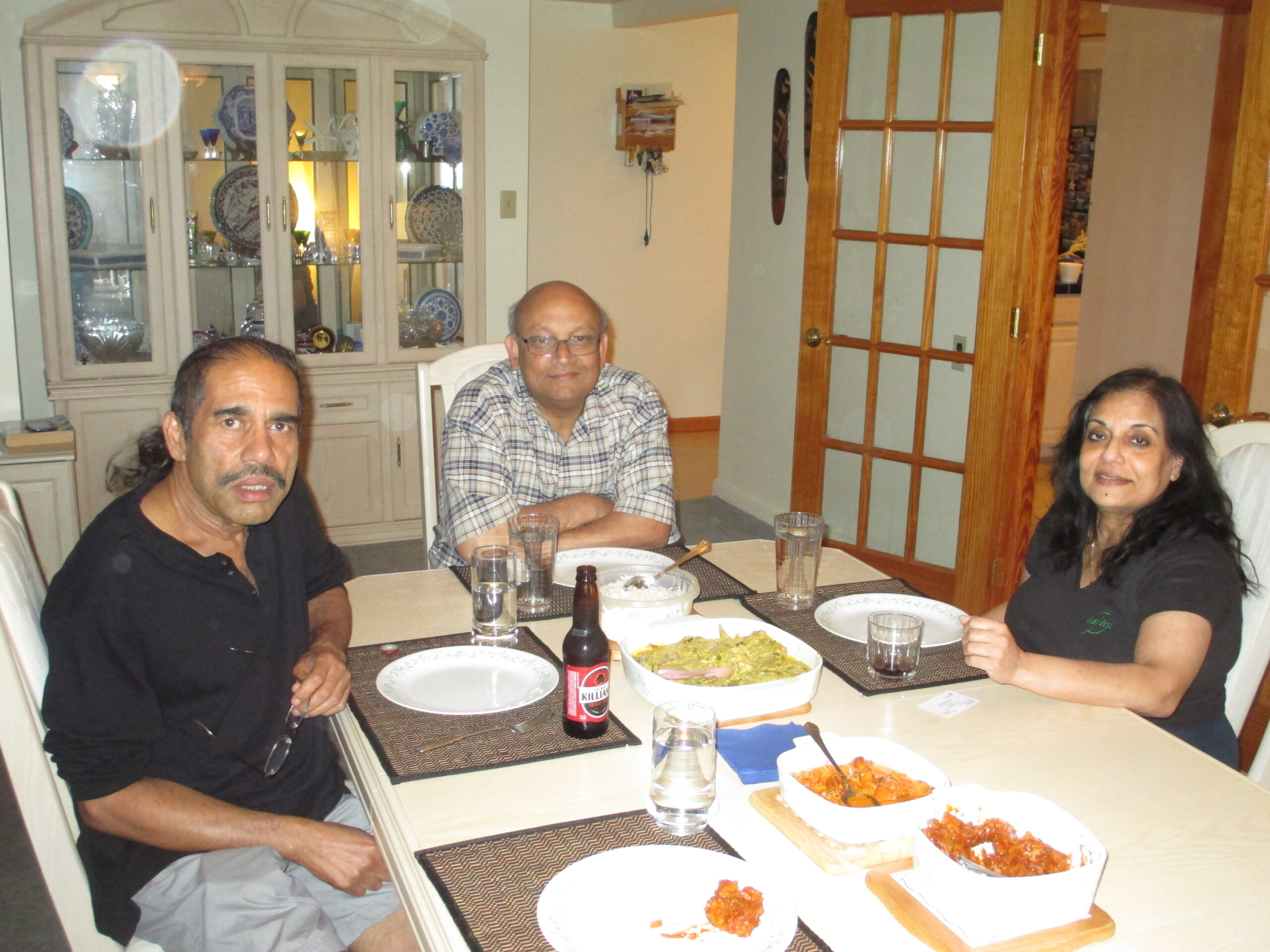
Econ Ph.D. from Rochester. Primarily a microeconomist. Taught at University of Kansas in USA and in KIMEP Univ in Kazakhstan. Retired last year. Now back to India (where I grew up) after 45 years
The first part was just the warm up. I started moving around like a squirrel from August 2014.
I went to India in july 2014 and then on to Almaty for the first time in August 2014. While I found that Almaty itself was cold and not that interesting , it was indeed centrally located relative to the Eastern Hemisphere. From Almaty, you can fly to India in four hours, Dubai in about five. Frankfurt in Europe was seven hours away, while Bangkok to the Southwest was about eight hours off. There are flights from Almaty to these and many other places.
The semester system gave us several long breaks
October – Fall break – seven/ nine days
December/January – Winter break – about ten days
March – Spring break – seven//nine days
Mid-May through mid-august – sweet summer break !
In USA , seven day vacations were no good for international travel, but here they were!!
And now my finances were in order, I had money to travel.
For two years, I took three vacations every year and a very long vacation every summer.
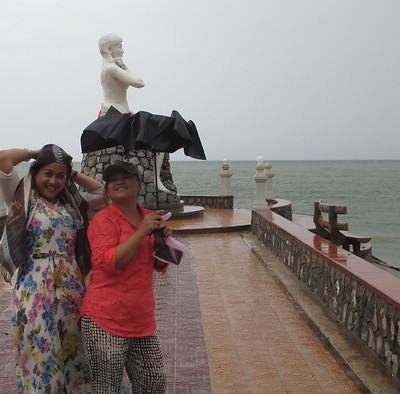
October 2014 – Went to Kolkata, then Phnom Penh, Cambodia. Visited Kep by the seaside.
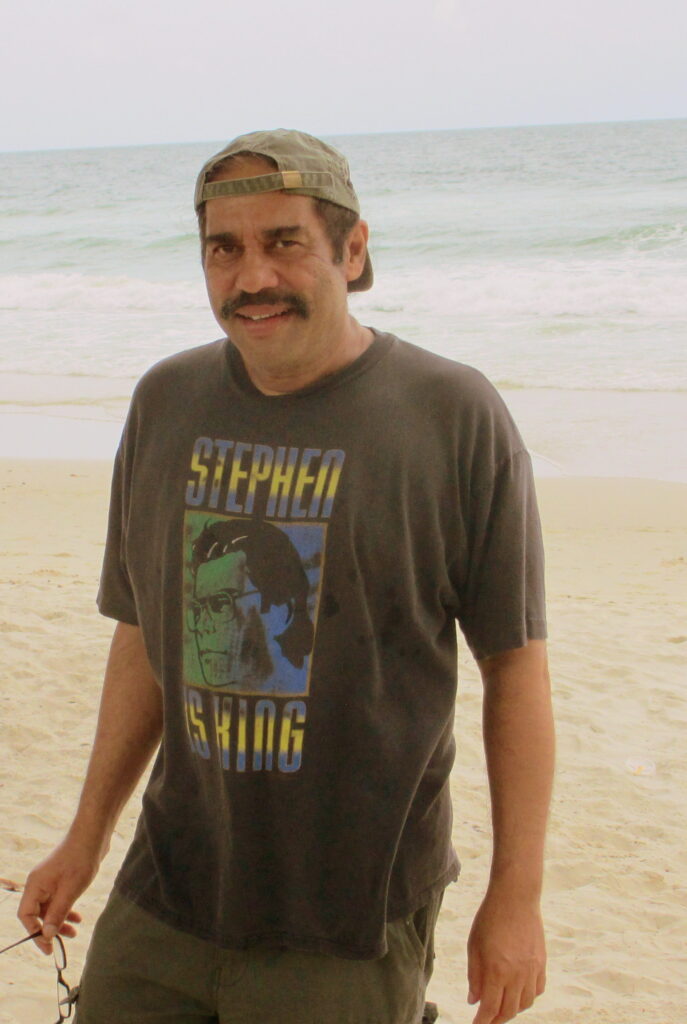
My friends’ wives on a very windy beach at Kep, Cambodia
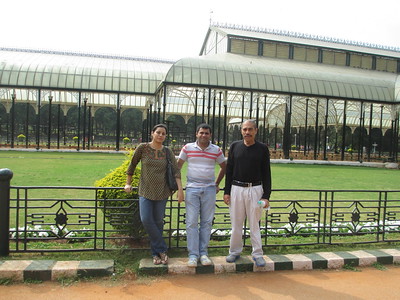
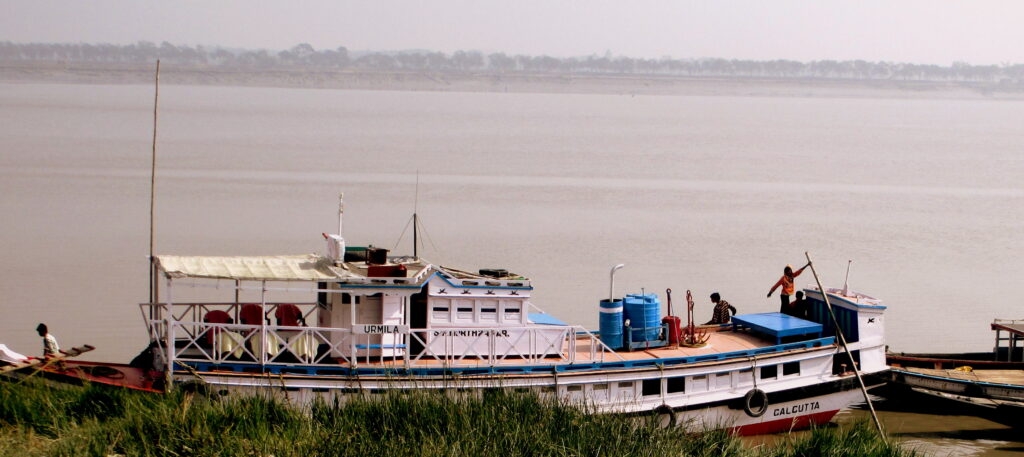
December 2014- January 2015 – Went to Bangalore in India, then to kolkata and Taki in West Bengal, and on to Mumbai .
Bangalore Botanical Garden, with Ramu and Shuji
Taki , West Bengal, at India- Bangladesh Border on Ichamoti River
March 2015 – Went to Oman to visit my nephew Rajarshi
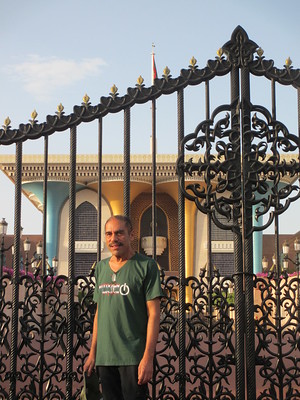
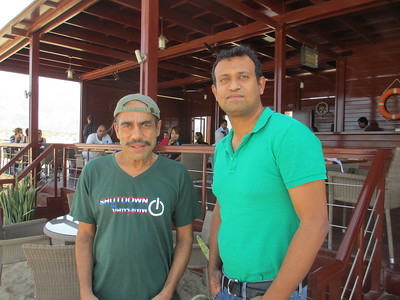
Outside Sultan’s CastleWith Rajarshi
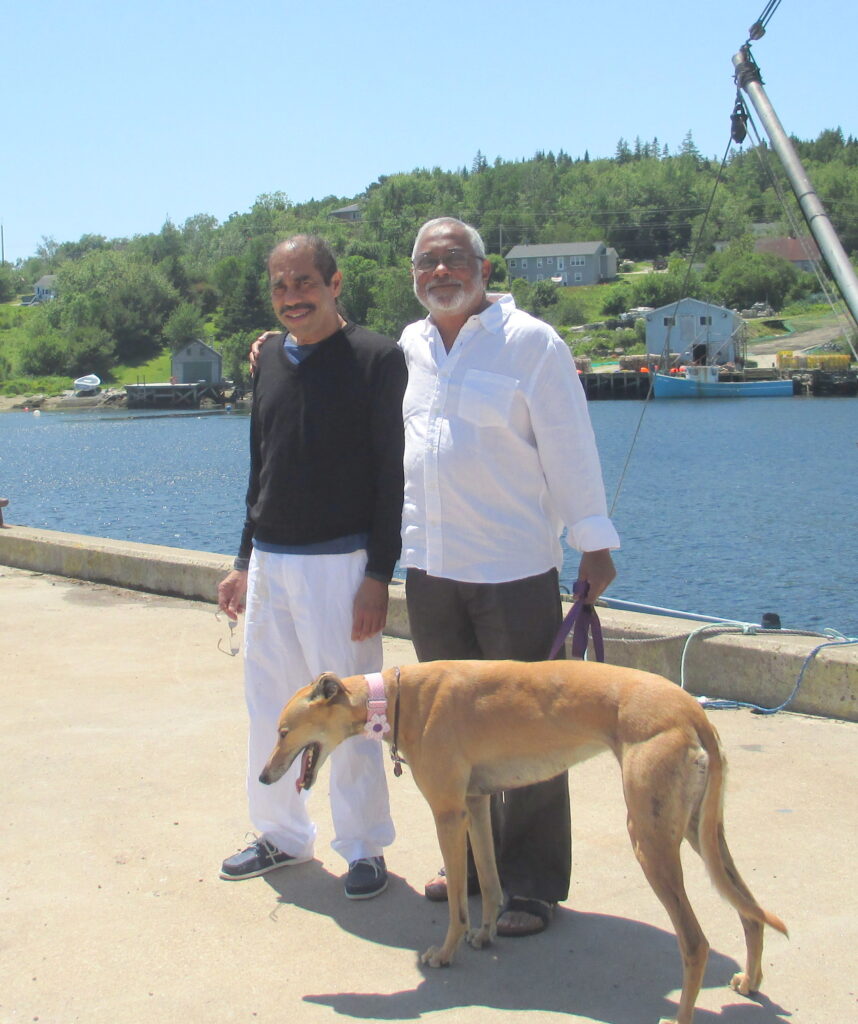
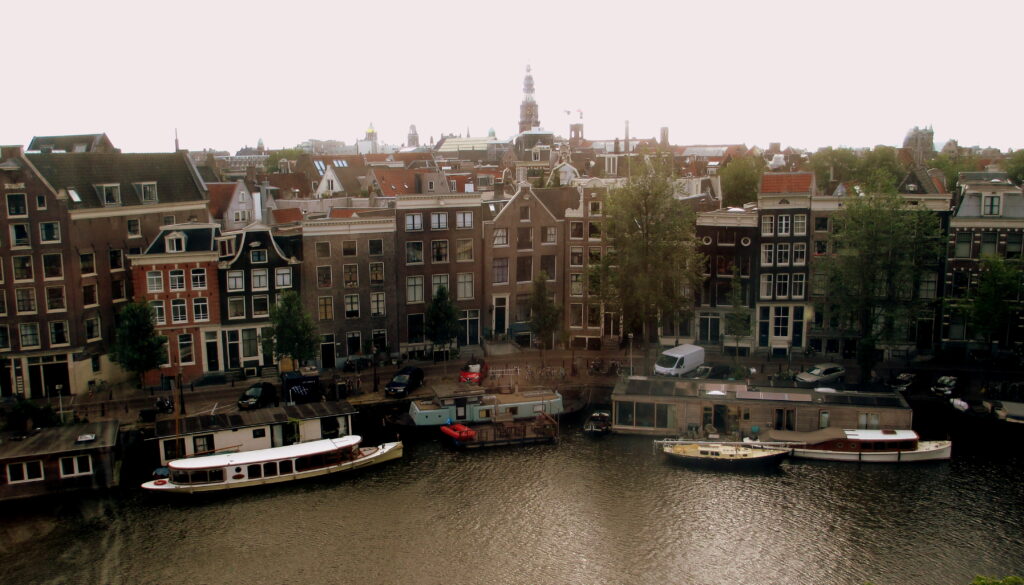
Summer 2015 – Went to Istanbul in June, then to Lawrence, Kansas – my hometown for thirty-five years. Then went to Asheville, North Carolina to visit my friends,then on to Scranton, Pennsylvania to visit some other friends, then to Montreal for a couple of days before I took off to visit my friend Swapan Dasgupta in Dalhousie, Nova Scotia. And then back to India after a few days in Amsterdam. That was a joyous two months of carefree travel with money in my pocket for the first time in my life.
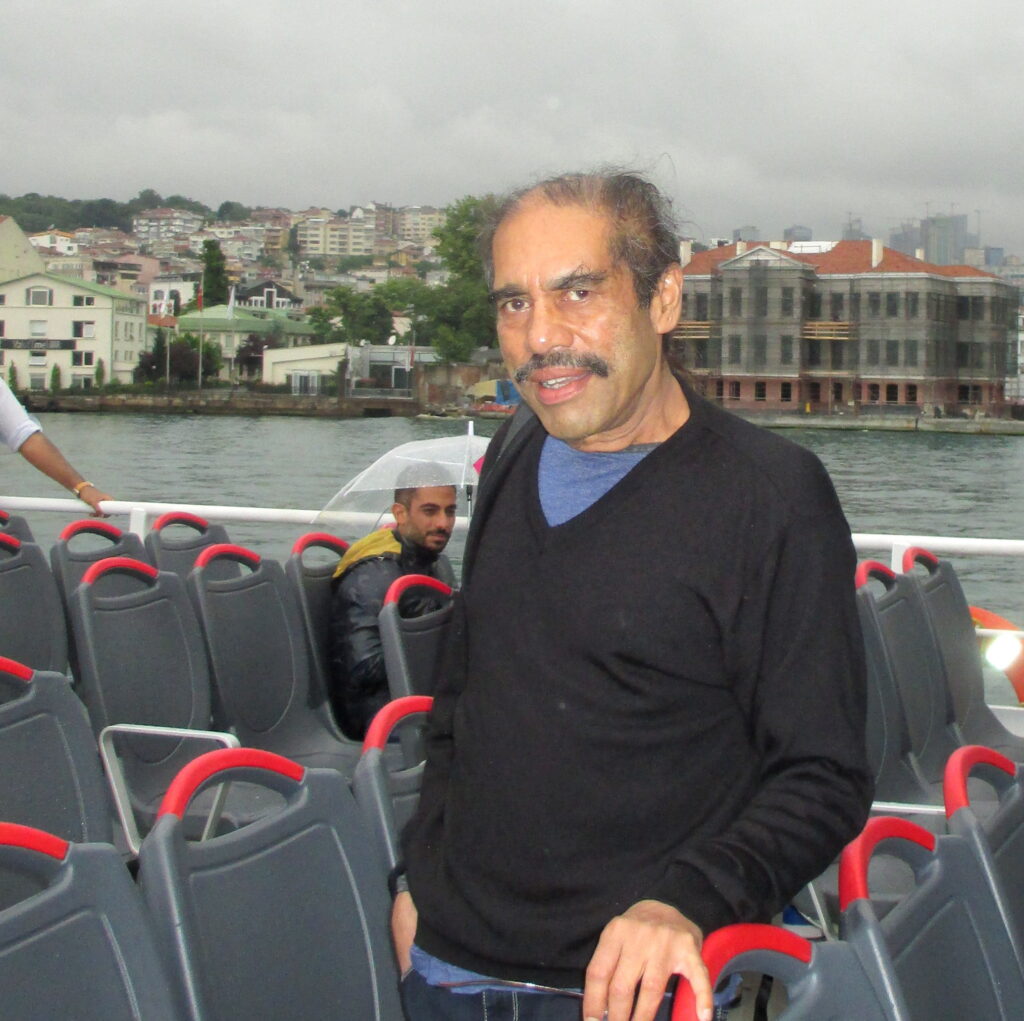
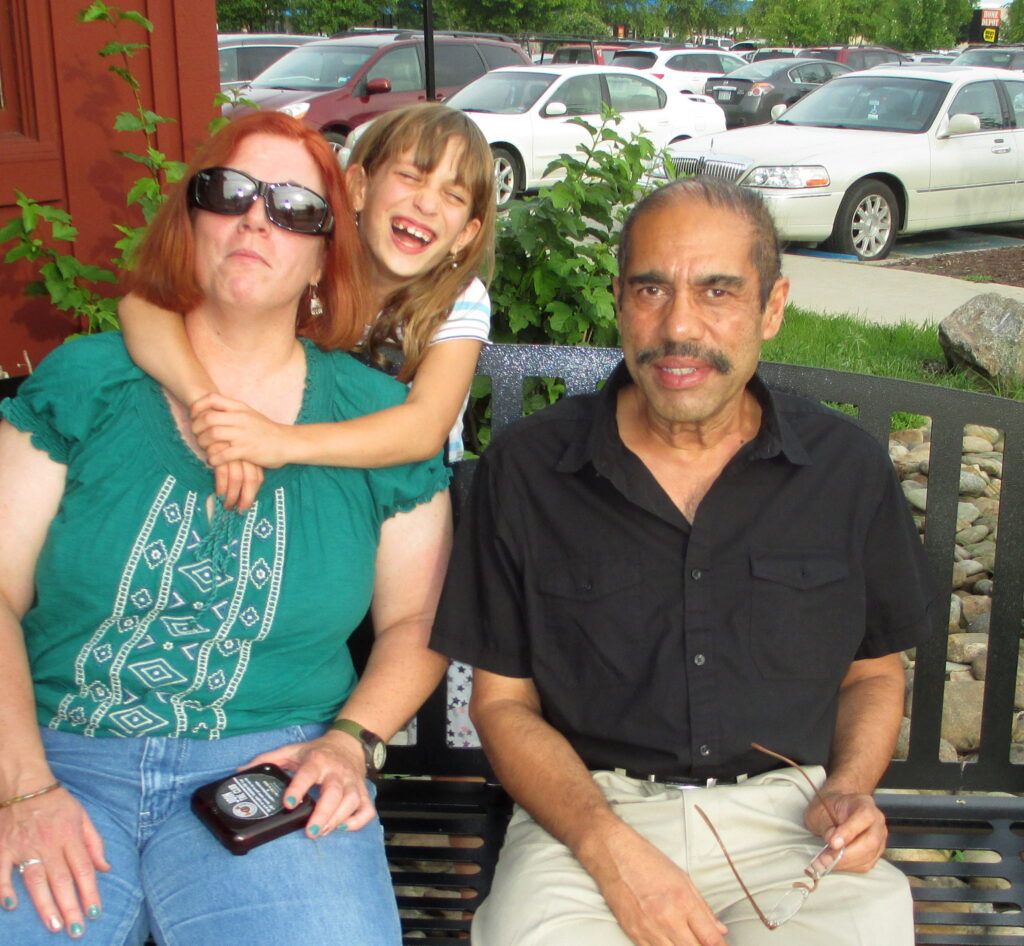
Clockwise from top left: Bosphorus Boat tour, Teri Chambers in Lawrence, Asheville, Friends in Scranton, and Beautiful Nova ScotiaView from hotel room, Amsterdam
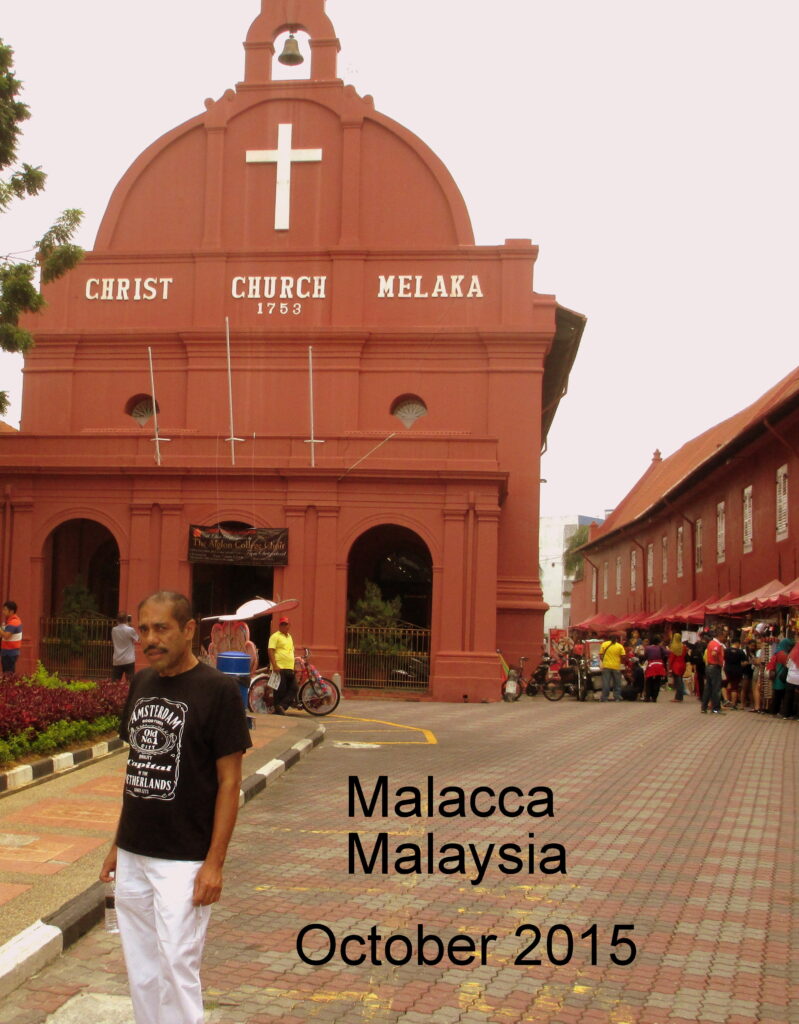
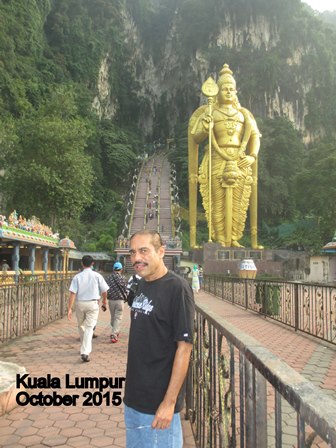
October 2015 – Kuala Lumpur and Phnom Penh, Cambodia, and of course, Kolkata.
Malakka is an old town near Kuala lumpur
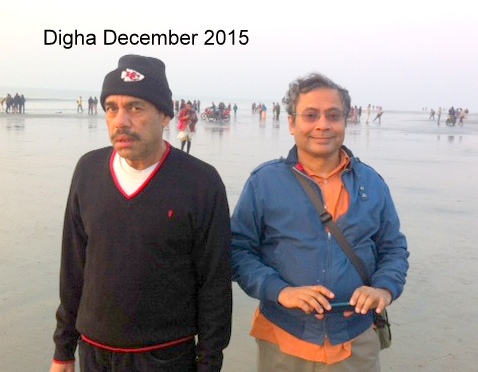
December 2015-January 2016 – Later in the month, went to Kolkata, and then to Digha – a popular seaside town in Bengal.
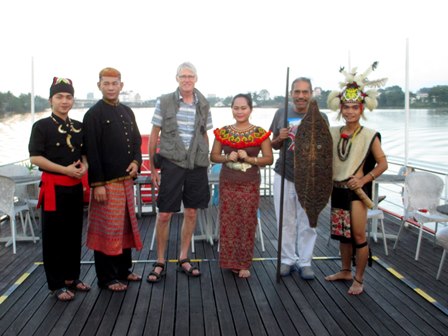
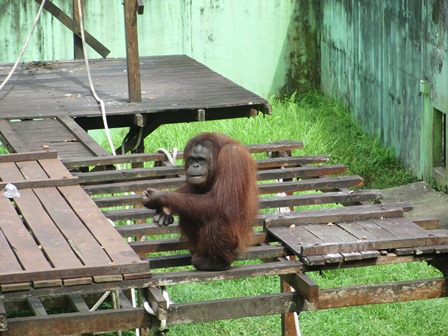
On the way back, went to Kuching, Borneo to see Orangutans!! Unfortunately the wild ones were hard to find, could only see the ones in a sanctuary!. Enjoyed the town of Kuching off the beaten track!
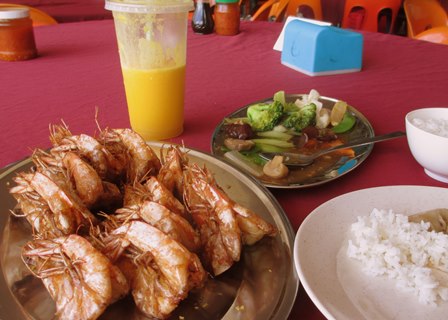
Tribal dance on the river, grumpy guy and the biggest prawns I have ever tasted
March 2016 – Went to Kolkata only , my mom was ill, I decided to stay with her for a full week.
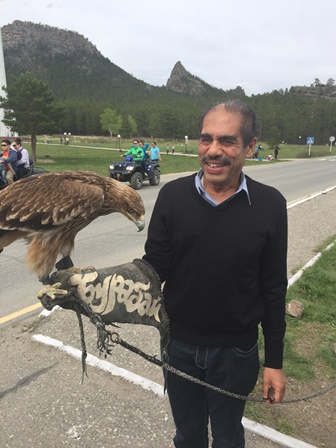
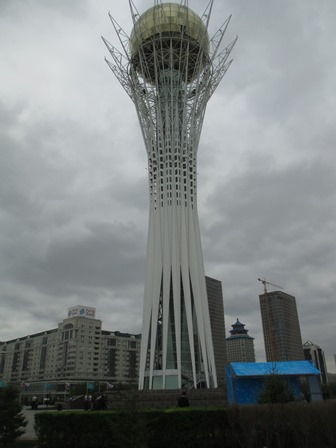
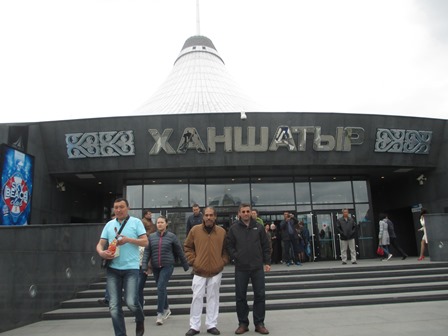
May 2016 – got a few days off after classes ended and final exams began. I took off to visit Astana, the capital of Kazakhstan and spent three days with my student from Kansas, Dr. Zaier Aouani and his friend Aksar. Astana is an architectural marvel, in the middle of nowhere, reminds one very much of Dubai, except it gets down to minus 40 c every winter. In early May, it was cold, about five degrees and windy, not much fun to walk around outside.
Although I traveled inside USA quite a bit, I never traveled much outside USA. From 1975 to 2000, basically went back and forth to India only. Always used the direct route over the Atlantic. Stopovers in Europe were expensive then, so I did not take any. Around 2002, I found that I can buy a ticket to Bangkok by flying over the Pacific, and the fare to Bangkok from USA was about the same as the fare to India. Then there was a sweet new airline called Airasia, which will take me from Bangkok to Kolkata and back for about $150. By doing this I was able to visit Thailand a couple of times and Hongkong once. That was it.
Boy that changed fast from 2013! I lived like a jet-setter till February 2019 when Covid hit – sadly, have been stuck in India ever since. Sometimes I am amazed at myself that I did so much over these six years! Please read on to check my hectic schedule – Cambodia has a prominent place in all this – because its proximity to India, my personal preference for Cambodia and its people (ladies!! – but that came later!!)
This is not a travel blog, it is merely a recap of my travels during 2013-19. When I get dementia, this will help, I hope!! Also, the Covid Pandemic might change permanently the way we travel, so this blog will remain as a hallmark of old-fashioned wanderlust.
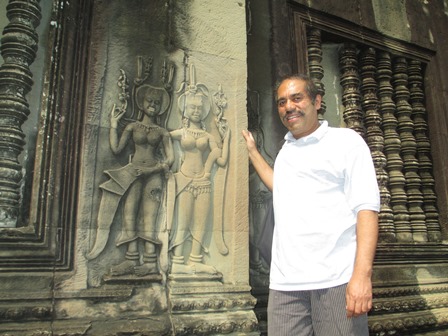
January 2013: Angkor Wat was on my bucket list for a long time. I visited Cambodia from India for the first time – after two days in Phnom Penh with my friend Partho .
I continued working at the university of Kansas during 2013-14 academic year. Received an unexpected job offer from KIMEP university in Almaty, Kazakhstan.. They even allowed me to join from August 2014. During my last year in USA I wanted to revisit my favorite spots in USA that I visited before. So the following was my schedule from 2013 summer to 2014 summer.
May 2013, – Before my semester ended, I squeezed a few days off and visited my favorite couple in Phoenix. From there, drove to Grand Canyon for my third visit , the rocks were as spectacular as ever!!
July, August 2013 – Went to Phnom Penh and Sihanoukville for a couple of days, then went to India for a month before coming back to Bangkok and Phuket for a couple of days.
Sihanoukville beachThe young lady in Turquoise wanted to marry me…. didn’t happen!!
January 2014 – Went to Kolkata, India again during my Christmas break from USA, and stayed in Bangkok and Cambodia for a couple of days on the way back, The highlight of this trip was Khao yai National Park day trip.
Khao Yai Park near Bangkok
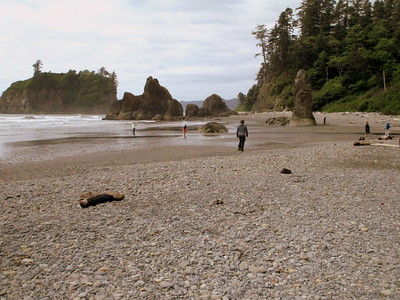
June 2014 – In May 2014, I was officially retired from the university of Kansas. In June 2014, I flew to Seattle, rented a car and visited Olympic National Park for the second time.
The biggest Ponzi schemer died in prison a couple of days ago. In case you do not know about him or maybe forgot, here is a short recap.
Madoff was a successful professional in the financial markets and ran his own trading business with his sons. On the side , he ran a brokerage business where he supposedly managed other people’s money. This is where he ran a Ponzi scheme which paid early investors with the funds supplied by new investors. Around 2008, when some large investors redeemed their portfolios, Madoff ran out of money and confessed to fraud. When the dust settled, it looked like the total amount the investors had was about 65 billion dollars, but this included the accumulated fictitious profits, so the actual amount invested and swindled was about 19 billion.
Madoff was sentenced to 150 years in prison where he died a few days ago. Madoff’s trustee, Picard and his law firm have recovered a lot of the original investment for the investors. The litigation mess that Madoff’s collapse started will likely go on for the next ten years.
Madoff was way smarter than me and possibly you , otherwise he could not have fooled so many people for so long. Very wealthy , highly educated people fell for his pitch as did sophisticated people working as money managers.
There are many reasons for this. The most prominent one is greed – since Madoff was well-known in the financial markets, lot of people assumed he has some secret strategy that he can use to generate steady returns every year. We teach in finance and economics courses that such strategies do not exist. If someone has a strategy like that, billions of dollars will be available to him for investment, which will lead to a breakdown of the financial system or a nullification of the said strategy.
In the history of the modern financial markets, some people have been able to generate extraordinary returns for a few years , but afterwards they all have closed their funds to new investors. Why? Because they themselves are not sure whether their strategies will continue to be successful .
The greed that I mentioned above was aggravated by second round fraudsters – these people were hedge fund managers who just dumped all their investors’ money to Madoff. Investors lost their money because of Madoff , and many of them sued these fraudsters for negligence, but they mostly weaseled out of these litigations claiming ignorance or simply a bad investment decision. Some of these secondary fraudsters (Ezra Merkin, Walter Noel and others) settled with investors and/ or Picard (the Madoff trustee) , but they still have retained many millions of dollars worth of assets. These people were real lowlife weasels, none of them were found criminally culpable. Apart from the fiscal judgments levied against them , they came out unscathed from this massive fraud – Madoff would not have been as successful if he did not receive massive amounts of hedge fund money from them.
Naivete or sometimes plain stupidity played another part in all this. In spite of the internet being around for many years and a lot of material being available to teach basic financial literacy , I have met people that are shockingly ignorant about the basics of financial markets. Let’s see what their thought processes are.
When you are sick, you go see a doctor who is a skilled medical professional. Give him his fees and He will give you medicine – your health will improve.
When your appliances need to be repaired, you call a skilled repairman, who will, for a fee, fix them.
By the same logic, when your wealth needs to be invested, you will call a professional money manager. For a fee, he will properly invest your money and get you a higher than average return.
The above statement is FALSE . What is true is the following:
When your wealth needs to be invested, you will call a professional money manager. For a fee, he will properly invest your money and get you an average return.
If you find a money manager who is offering you a higher than average return for a fee – do not believe him and do not invest your money with him, It is that simple.
Wait a minute – a doctor earns his fee for his valuable expertise about your body, a repairman gets his fee for his valuable expertise about your appliances, but a financial expert gets his fee for getting you only the average return?
You can get an average return on a bag of money by buying an index fund with it (if you don’t know how, you can learn from the internet in about five minutes!)
Sadly, this is true, which means you do not need a financial advisor to invest in the stock market if you only want the average return (which has been pretty good over the last 80 years – beats buying a term deposit!!). And no honest financial advisor will promise you an above average return! What they might do is to look for short term opportunities for you depending on your risk-tolerance. In other words, they will gamble for you for a fee!! As long as you agree to this, it is perfectly alright to gamble (take risks ) in the financial markets – indeed some people I know have become very wealthy by gambling successfully in the financial markets. Further, some financial advisors will look very hard to get you a tiny little advantage by buying a combination of products. Hypothetically, suppose a bond issued in your city by a educational institution gives a tax break for the residents of the city. If you buy this bond with other products so that you qualify for the tax break, maybe you will get a quarter point extra return above the average on your portfolio for the next three years. If such opportunities exist, along with tax havens in inheritance trusts or foreign countries if you have a lot of money, it is the job for honest financial advisors to find those and charge you a hefty fee if you want to structure your portfolio according to their suggestions.
If you want to take risks, the financial markets are a great place for it. You can always gamble on some obscure stock like “Google” was about twenty years ago and become very rich. You may also never get that winner stock and squander all your money in futile pursuit. The choice is yours, so are the rewards and failures.
Just do not give your money to an old Jewish uncle or any uncle who promises you an above average return by using a secret strategy, Send the money to me, I will double it in a couple of years (just kidding!!).
Did I ever gamble in the stock market? Did I lose big or win big? The details of what I did will remain a secret, but overall I came out a winner , mainly because I got lucky. Because of that I do not invest in the stock market any more. My luck will run out this time.
When a novel product comes out, inspired by a brand new technology, there are some crazy people who spend a large amount of money and time to get their hands on it. Remember the first buyers of iphone? Or Buyers of Tesla cars? Or Buyers of all kinds of gaming gadgets?
These people know that in a few years or even months, price will come down and there will be easy availability of their favorite gadgets. Still they wanted to be the absolute first to get their hands on their favorite product.
Well, we Bengalis had our chance to show our obsession with a new technology. Long before smartphones and Broadband and gaming. This technology dealt with fish – illish to be exact! Please read on
Illish-maacch and Chicago Cops – a fishy tale
You folks may not be aware of it but 1992 was a life-changing, monumental year for all of us Bengalis living abroad. Before 1992, we were merely another group of NRI’s – trudging along, making money, raising kids, disagreeing with spouses and such.
Then came 1992, and a golden opportunity opened up to transform ourselves from a group of mere generic NRI’s to a cackle of the happiest people in the entire universe!
Now that you are totally clueless about this, let’s give you a little background.
The Japanese, who eat tons of sushi, were always obsessed about freshness of their fish. They are the ones that developed the technique of flash-freezing fish right on the fishing boats. Frozen instantly, the fish retain their original taste.
Our friends from Bangladesh adopted this technology and decided to start selling flash-frozen Illish and other delicious fish. The premiere was in 1992, in a handful of selected big cities in America. Like Chicago, New York, Los Angeles.
We lived in a little town about five hundred miles south of Chicago.
As the Bangladeshis embarked on this monumental fishy endeavor, the local press, the national press, and world press totally ignored them.
Fortunately for us, a little blurb appeared in India abroad, the overseas Weekly for expats that some people read regularly. The blurb was read by a few, and it resulted in an avalanche of excitement throughout North America. Saliva drooled from our lips as we picked up the phone.
Liberally translated, this was one Bengali exclaiming to another “ Really, fresh Iilish from Padma (Ganga becomes Padma in Bangladesh), are you serious?”
We had a great plan. We, the pioneers, will go to Chicago, procure this precious illish then dazzle our brothers in our hometown with illish from Bangladesh!. Four of us left at 6 am on a Saturday morning, intending to drive continuously by taking turns. We will arrive at Chicago at around 6 pm or so, pack our cooler with a ton of frozen illish and drive back continuously, getting back sometime Sunday morning. The cooler was packed with high-tech “Blue ice” –it would keep the fish frozen for many hours.
Like any sound plan, things went wrong. The van broke down in the middle of nowhere. By the time it was fixed, it was around 8 pm Saturday evening. We figured we would continue driving to Chicago, getting there around 8:30 or so in the morning.
We got to the Devon Street area in Chicago around 5 am in the morning, much earlier, partly because of our miscalculation and partly because there was very little traffic on Chicago highways during early morning. It was still pitch dark.
The store opened at 9 am.
There was no point going to a motel for four hours. Some restaurants appeared to be open for breakfast. But we could not possibly spend four hours in a restaurant.
Binoy suggested that we go to three separate restaurants, and spend about an hour at each of them, and then wait in front of the store until it opens. His suggestion was summarily dismissed as childish and needlessly expensive.
At Chinmoy’s suggestion, we found a half-empty parking lot right next to a gas station close to Devon street, parked our van and promptly fell asleep.
This was a very bad idea..
I woke up, startled at a clicking noise. As I opened my eyes, there was this barrel of a gun pointed at my face. Just like in the movies! Except this was a real gun and I was not watching TV!
A harsh voice announced crisply
“Put your hands up and slowly walk out of the vehicle , now, please”.
There were six cops with their guns pointed at our heads, and a snarling German Shepherd dog. I have never been so scared in my life. They immediately separated us and started asking questions.
Of course, we perfectly fit the profile of drug dealers, making deliveries in the early morning hours.
I was the lucky one. I got to sit in the passenger seat of the police car with the dog. The bitch (excuse my profanity, she was one) was fortunately separated from us, behind heavy steel mesh in the back seat. The cop politely questioned me for about twenty minutes. Every five minutes, he will leave the vehicle to confer with his colleagues. At that point, the b**ch would start howling at the top her voice, her paws on the mesh, her saliva hitting my body. I could see her fangs and smell canine morning breath. Only the very durable steel mesh saved my life that day!.
Then the cop would return, politely tell the dog, “Shut up, Susan”, and Susan would immediately pretend to fall asleep. Questioning by the cop will resume again, followed by another round of vicious barking. The cycle repeated itself three or four times. Susan was the wrong name for her, of course. Cujo (or Saalee) fit her a lot better.
The cops absolutely refused to believe that we came from five hundred miles away to buy fish (and I kind of don’t blame them).
They questioned us about our past and present, , searched our van from top to bottom, patted us down, searched our personal items, checked our ID’s, crosschecked our ID”S with their office computers, and finally, disdainfully, let us go.
One of them contemptuously told us at the end “Sir, this was not a very smart thing to do. You could have been robbed by local criminals, or assaulted or even killed by real drug dealers . Next time you come to buy fish here, please arrive during normal business hours.”
No kidding!
There were still two hours left before the store opened. We went to a breakfast place, and crashed with our shaken bodies and souls. Fortunately none of us needed to change our underpants, although I came pretty close owing to my encounter with lovely Susan .
The drive back was routine. I did my three hours of driving first and then went to the back seat, fell asleep soundly, hugging the cooler full of fish.
No, we were not selfish. Everyone was invited to the ensuing illish-fest, where Jhal, jhol, mustard-illish, sour-illish, steamed illish and even fried illish roe flowed freely. (If are wondering what these are, check the recipes on the internet!) And we had a story to tell as well.
In a couple of years, almost all Indian stores started carrying Illish and other fish in their freezer. Today, no matter where you are in America, you can get this stuff pretty easy.
But we were the pioneers! We beat everyone else by two years!
I still wake up at night dreaming about Susan, though. Can’t get her out of my mind!
Both Parts I and II were written about ten years ago
The Kanjus Chacha and the Gypsy Girl (Part II)
Synopsis of Part 1: ( Ratan the Kanjus Chacha , a real penny-pincher, left his doctor wife in India, who somehow got pregnant when Ratan was not around! He did not divorce her, because Anjoli the Doc made a lot of money!)
Before I tell you how Ratan met this gypsy girl, let me explain about Ratan’s automotive exploits.
A brand new standard car in America would cost twelve to twenty thousand dollars, a luxury car possibly a lot more. A decent used car would cost at least half of that.
But Ratan found a real gold mine. In small towns on Satruday mornings, there are live car auctions. No, these are not lovingly restored antique cars, they are junk cars that are sold “as is”.
Rows after rows of abandoned automotive hulks helplessly await truly desperate buyers in need of transportation! The signs, almost comic, are posted on the windshields:
“BMW 1975 – no engine – $200!”
“Toyota 1990 – no seats, no tires, $600!
Cadillac 1985 – no headlights, no battery, $700!
The seller is not being honest, he merely determines the opening bids depending on what he observes. There are, of course, other possible pitfalls associated with these cars, like one with an engine may not actually start!
Ratan got his last car for $300 from here, fixed it up for anther $400 and it’s been running for the last eight months! He kept on going to these auctions though, because he knew he will need a replacement soon!
He bumped into this group at several of these auctions – James , an older man in his late forties, and his grown up children, Ciara and Brian, both in their twenties.
Ratan passionately explained to them how Americans waste thousands of dollars on new cars, and his general thesis about maximum wealth accumulation. To his surprise, they agreed totally. They liked saving money too.
They looked darker than the average Americans.
“Are you guys Hispanic?” Ratan asked
“No, our folks came from East Europe” Ciara said. “Many years ago.”
It was James that invited him to dinner. Their apartment was too small and the food really sucked. Gross chicken dumplings that tasted like wet flour, and boiled potatoes! These folks are really cheap, Ratan noticed, somewhat amused. The only redeeming feature was Ciara, an attractive young woman that continuously flirted with him.
Ratan decided to invite them for dinner. He can cook a mean Chhole and chicken wings –cheap but much tastier!. To hell with boiled potatoes! Ciara and her family loved his spicy food.
The men were mainly passive, James watched TV and smoked an endless number of cigarettes, while Brian, the younger one, was constantly playing video games on his hand-held console, snacking continuously on any edible items within his reach. Ciara was the only lively one.
While they were lounging after dinner in Ratan’s living room. Ciara veered off to the kitchen. Out of the corner of his eye, Ratan noticed a feminine hand waving to him.
“ I love your balcony!” Ciara said. “We don’t have one.”
Hanging out on the balcony with a young, attractive and flirtatious girl – Ratan is only human – that’s when things started warming up!
The feminine waves emanating from the kitchen continued on subsequent visits. Soon, Ciara was admiring Ratan’s comfy bed upstairs. As they were romping around, the men remained totally oblivious, James kept on smoking and Brian kept on furiously pushing his game stick.
The entire family appeared to be serious penny-pinchers. In fact all his dates with Ciara were at his home, with her dad and brother in the living room.
“Why do you always bring the whole contingent?” He asked her “We are never really alone together”
She laughed “Yes we are, in your bedroom upstairs, remember?”
“Hey, this saves a lot of money.” Ciara explained “ We turn off all the lights in our place in the evening while we are visiting you. James and Brian can watch cable TV here. We canceled our own cable at home. And Brian can eat snacks at your house instead of mine”, she winked!
Ratan was impressed. No, Ratan was hopelessly smitten.
Finally, a woman with the same goal as himself. Maximum wealth accumulation is happening now, along with romance! What else does a Kanjus guy want from life?
This is it, Ratan decided. To hell with the Doc! He will get an ex parte divorce soon.
After a lot of thought, he bought a moderately priced diamond ring (hey, this would stay in the family, anyways!) and proposed to Ciara. She gleefully accepted.
They started making plans. This was going to be a true partnership, Ciara said.
They jointly bought Ratan’s first new car. No more jalopies, Ratan decided, as he happily got rid of his junky drive! Each would drive the new car on alternate days.
They jointly rented a new apartment . Ratan moved to the empty apartment first.
On a beautiful Thursday evening, they all met at Ratan’s house .
“This is the plan” Ciara said “we have left our old apartment. James and Brian will stay at your house, and will pay you rent.
We have a lease drawn up for a year already that we will sign right now. I will move in with you to the new apartment after we buy some new furniture over the weekend.”
It was Ciara’s turn to drive the new car. They all came to Ratan’s new apartment and dropped him off there.
“I will get a ride from my friend tomorrow morning to go to work., Ciara” Ratan said
“And I will pick you up from work tomorrow evening. We will go furniture shopping, and I will move in with you over the weekend “ Ciara said, as she kissed him goodbye.
Ratan happily slept on the floor of the empty apartment Thursday night. He had finally found his soul mate! Everything is perfect, at last!
The next day turned out to be kind of bad for Ratan.
In fact, you could call it probably the worst day of his life.
Ciara’s phone went dead around Friday afternoon, and she never showed up. Taking a taxi, Ratan showed up at his own house. He was very surprised. Total strangers were living at his house.
When the dust settled, Ratan found that In a small window of eighteen hours, Ciara and her family had sold all of Ratan’s furniture, TV, stereo, computer and all, sold the new car, and James subleased Ratan’s house for a year ! The new tenants had already moved in, apparently they paid James six months’ rent in advance for Ratan’s house.
Ciara had vanished, she called him from Hawaii for one last time.
“We moved to Hawaii, sweetheart! By the way, we charged the tickets to your credit card. And James and I just got engaged. He has already given me a nice diamond ring! Thanks for all your help! “ She giggled.
“James is your lover?” an incredulous Ratan asked.
“And Brian is my boyfriend. I am a gypsy girl, baby”, a chirpy Ciara explained “Sometimes we keep several men around when we are young. When James gets older, I will get rid of him and settle down with Brian!”
The damage was pretty steep for Ratan. The diamond ring was gone, for sure. Not only he lost his new car and all his furniture, but he had to persuade the tenants at his own house to leave by paying them six months’ rent, and pay a year’s rent for his new apartment for the duration of the lease. The total ran into many thousands of dollars. The tickets to Hawaii were bought from his computer, at his house, using his credit card, by James, while Ratan was blissfully engaged in his last “wave” episode upstairs . The credit card company would not even hear about canceling the charges.
The gypsy girl really cleaned him out, putting a big dent in his heart and his wealth. Yes, Ratan went to an attorney. He was sympathetic , although it appeared that he was trying very hard not to burst out laughing.
“Apparently, sir, no laws were broken. Forget about criminal prosecution, it would be difficult for you to even get a civil judgment against Ciara.” The attorney explained
“ The gypsies are well-known for their conniving ways. Instead of stealing, a small number of them have adapted to being vicious con-artists in modern day America. They did research on you, and played you exactly the way you wanted to be played. I am sure the new tenants in your house were part of their network.“
“ Ciara and the gang would soon clean out another middle-aged soul in Hawaii before moving on to another location. The gypsies don’t’ stay in one place for too long! “ He informed a dazed Ratan.
We don’t rib Ratan for his Kanjusi any more. We kind of leave him alone.
He still gets exuberant mail from Anjoli about “their” son’s recent antics! She is planning to send their son to a posh private school in Kolkata followed by an expensive college in America. Ratan will need to pay for half of all that.
Oh dear! He never formally contested his paternity! It is too late now, I guess!
This is a continuation of my series about NRI chachas that I have met over the years. This one is somewhat embellished, more like a “composite”!
Maximum wealth accumulation, that was Ratan chacha’s motto.
In grad school in America, we were all exceedingly poor owing to our measly stipends. Most of us desi students lived in one big apartment complex. Most of us will cook dinner after coming home from school around five pm and try to make one satisfying meal with our non-existent cooking skills. Hey, in India, we were raised as bright budding engineers, scientists, mathematicians and such, our mothers and bhabis taking care of all our fastidious culinary demands. Here, we could not afford to eat out even at the cafeteria!
We started by staring at frozen mounds of raw chicken that we bought at the grocery store! What the hell do you do with this stuff?
Some of us were natural –born cooks though. Their apartments would soon smell of chicken curry and such around six-thirty in the evening. That’s when Ratan would arrive, make small talk, admire the food about to be eaten and finally, casually, grab a small portion for tasting!
(“Excellent Chicken! Very good! Where did you learn all this?”)
Ratan would visit about four or five different apartments in the evening and make an entire meal out of small tastes of chicken curry, keema curry, even sambar and idli and occasionally maaacher jhol.
Hey, we were not dumb, he was soon nicknamed the “scavenger” and ultimately banished from all apartments during dinnertime. We heard that he hit the middle-eastern circle later but was soon declared persona non grata.
After he made some moolah as an established academic in America, he asked his parents for a hook up marriage. The gods got him married to a lady doctor in India. Usually, in this case, the doc migrates to USA, goes for additional schooling to get her US medical license. The transition takes a few years. But your Ratan chacha was not going for this.
“We are making good money in two different countries. Why spoil that? You stay in Kolkata, I will stay here – I will see you every summer during my summer break”
Hmmm…., less conjugal bliss but a loadful of cash- happiness – Kanjus or what?
(“Loadful” is not a word, I just made that up )
He never allowed his wife to visit America.
“ You don’t even know anyone here, sweetheart. What’s there to see in America anyway! Just some tall buildings! I will go every summer for three months and visit you and our families and friends – kill many birds with one stone hahahaha!
Anjoli, the lady doc, had a great private practice, saving up a pretty stack for the couple. Three years into their marriage, she got pregnant. Ratan was joyously making plans to raise the child in India, saving even more money, when a bombshell hit him.
It was late March. The baby was due in October, Anjoli’s ob-gyn doctor said.
Ratan gasped. “Are you sure?” he asked the doctor.
Ratan left India in August the previous year.
Ooops! Let’s do some simple math here.
You know how babies grow, right?
A baby conceived in June, July, or August this year will not be due in October the following year!
Lots of screaming ensued over long distance phone calls. Ratan was not going to India any more. But divorcing Anjoli will mean separating from all the doctor’s money !
Give up half of a loadful of cash or live the life of a jilted mate – for ordinary men, the decision would be easy.
But our Kanjus chacha had to think about this . For about five years!! That’s when he met the gypsy girl!
.
Yes, there are gypsies in America! They migrated from Europe many years ago, many got assimilated, some not so much. Among the ones that remained separated from the mainstream, some ran circuses and carnivals, some were in the music business, but there was a small core that continued their somewhat unusual ways.
Ciara’s mom, a white girl, eloped to California with a dashing man she met at a carnival. It turned out to be a pretty bad deal. The handsome gypsy man turned out to be a professional hustler and a wife-beater. Ten years and four children later, she escaped back to her parents in her hometown . Ciara grew up floating between her working class grandparents and her struggling single mom. But she remembered her dad well, she was a true gypsy at heart. But Ratan didn’t know any of this.
(The gypsy girl would change Ratan’s life for ever. But you have read the second part to find out!)
This is a revised version of my earlier blog about Japan, but here I am planning to add a lot of pictures. Some pics have been added, I will add more later.
Impressions of Japan –Tokyo, June 2018
You don’t understand Japan and the Japanese until you actually visit Japan and observe the behavior of your Japanese friends (both in Japan and abroad) over a period of time. Now I have done both. This does not make me an expert on Japan. Yet the conclusions I will draw by myself are not in any book or film or video. These are unwritten and unpublished truths about the Japanese society. So here they come (without much evidence!) – I invoke my freedom of expression rights, so you absolutely have the right to vehemently disagree with me.
The Japanese have many rules and customs and etiquette – some formal, some informal, some strictly enforced, some expected of good citizens. They are crazy crazy polite. If you go to a store to buy a loaf of bread, somebody will bow to you at the door, and will say ‘connichewa” (hello). You will have to do the same. When you come near the shelf where they keep the bread, another employee will notice you, bow and say hello and possibly enquire about your shopping needs. You will need to bow and speak with him and smile. When you are going to the cash counter, another employee will thank you for your patronage and ask you some additional questions. You will need to bow and smile and talk to him or her.
Finally at the cash counter, more bowing, exchanging pleasantries and a round of “arigato” (thank you). At the exit door, another bow and more pleasantries exchanged. In India, some stores may have a lot of employees on their sales staff, but you can ignore them. In japan, you have to speak to everyone, and BOW until your waist hurts. Almost all of us foreigners can not possibly follow these customs and many others that are followed by the Japanese every day!. We are excused by the Japanese for failing their standards but at the same time, under all the politeness, they feel smug at our lack of sophistication. As a result, the Japanese think we foreigners are rude and impolite in general
The Japanese do not care much about diversity. They like their society as it is, almost entirely consisting of ethnic Japanese. There is now a sprinkling of working foreigners and students. Of late, the resident hafus (mixed race) have grown up. If they are successful, they are celebrated (like Naomi Osaka). If not , they are tolerated and suffer quiet but persistent discrimination throughout their lives.
The Japanese do not care about economic growth that much – in fact stagnation is OK with them. They already have a high standard of living and they want to stagnate around that forever.
No drugs, no crime, decent food , excellent transportation and entertainment options, and decent salary and job security even for the lowest level jobs – the Japanese have quite a high standard of living indeed. Apartments, like hotel rooms, are tiny but clean and efficient – and outside Tokyo, they are not that tiny!
The Western media cares more about Japanese stagnation than the Japanese citizens.
Nor are the Japanese worried about declining birthrates, or decline in the number of married people. The Western media write alarmist articles frequently about the decline in Japanese family life, and the depression and the high suicide rate. Any evening of the week, there are huge crowds on the streets, shopping, eating and having fun – not consistent with a depressed society.
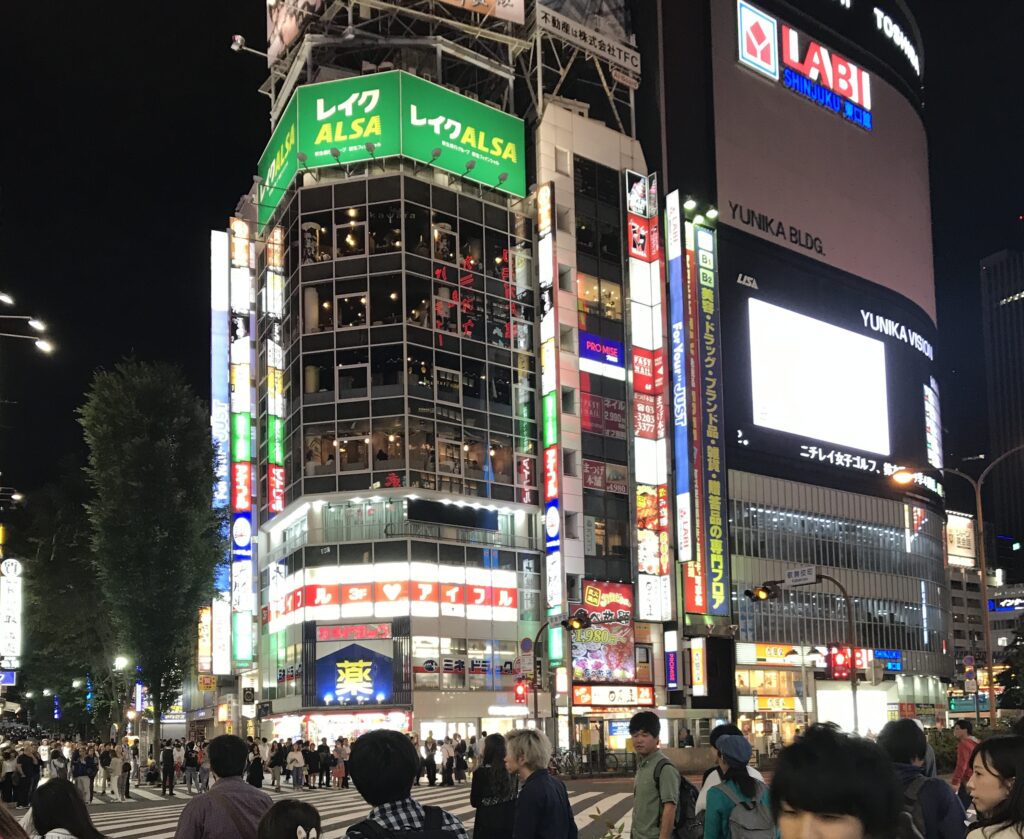
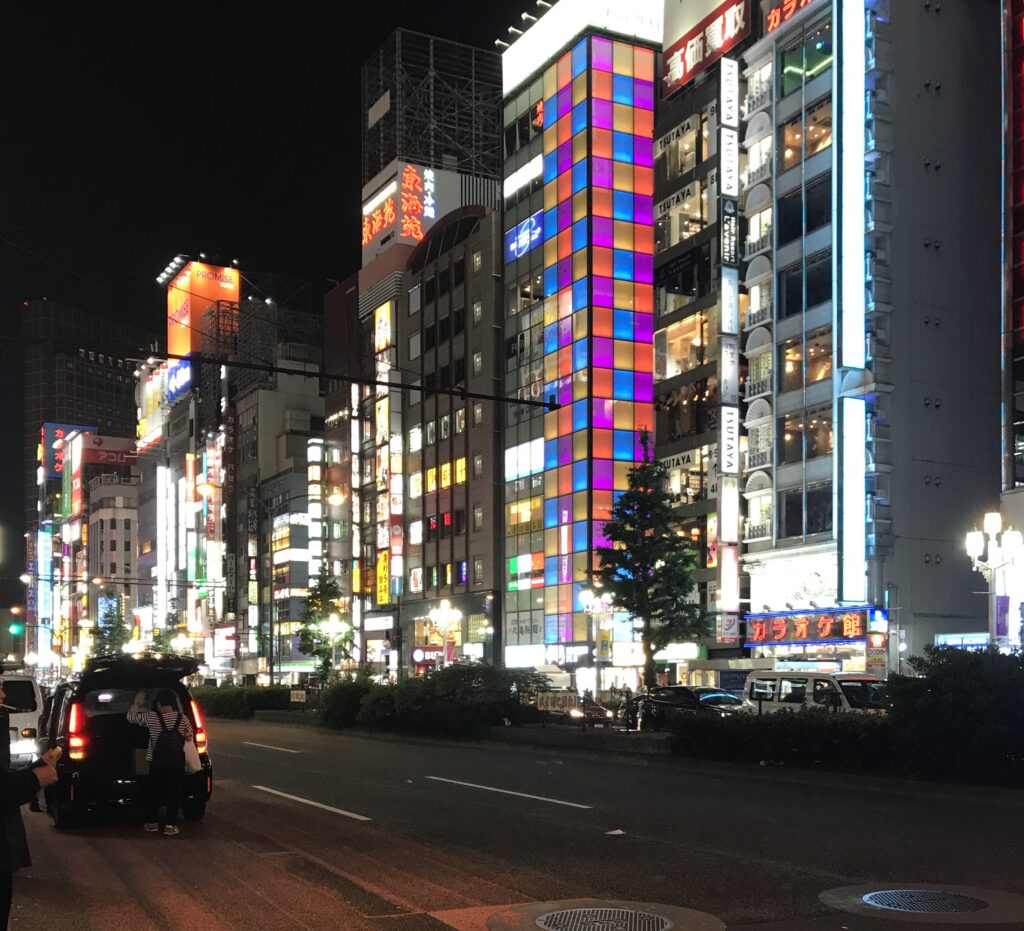
Every night, buildings and streets are crowded like this.
Every night, buildings are lit up like this and filled with hordes of people. A depressed, suicidal society? Not for most people!!
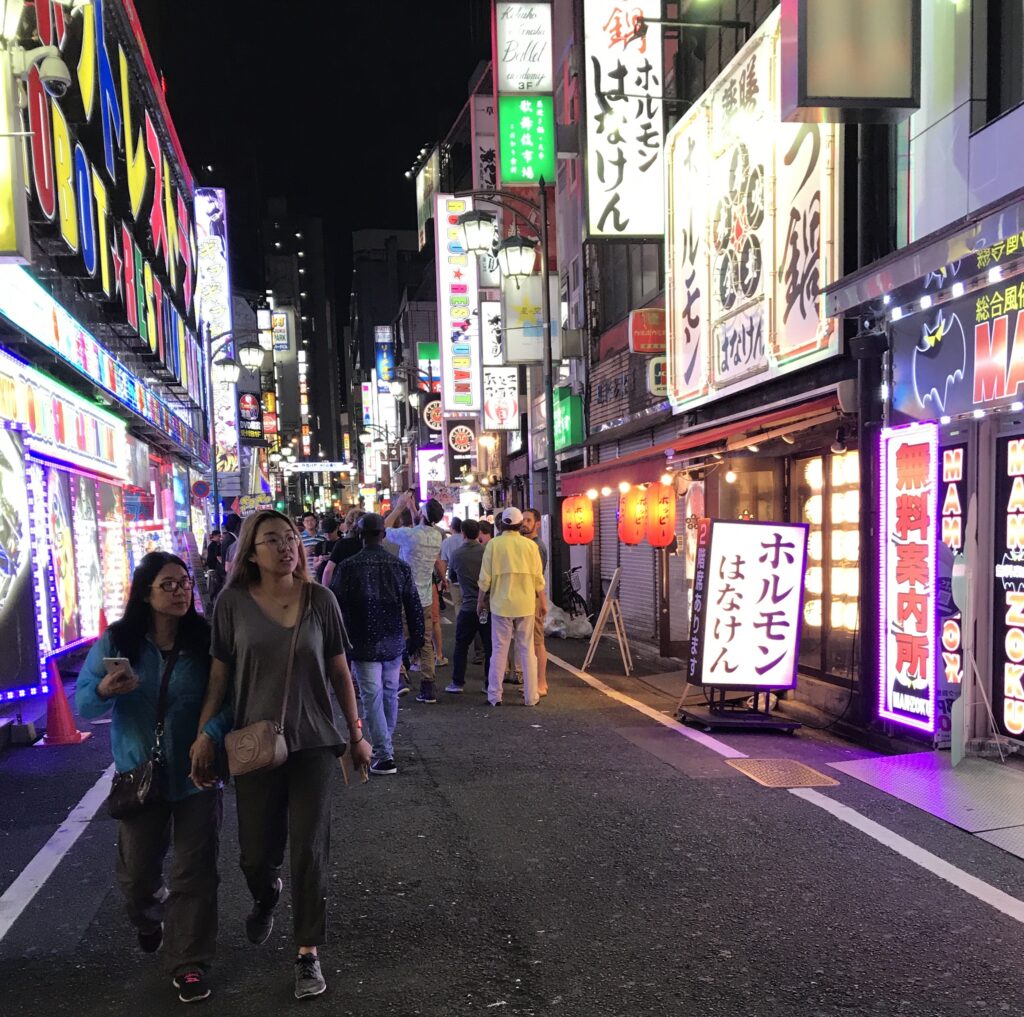
A typical night in the middle of the week in Shinjuku, the central business district. These are just regular bars and restaurants on both sides, nothing special like live music, concerts or wild parties. This is just normal for Tokyo.
Mostly, the Japanese do not wish to travel to uncivilized countries in Asia (includes India, Malaysia etc.) or Africa or Latin America. USA and Western Europe are OK . I have kept in touch with many Japanese friends since our university days about forty years ago. Everyone has travelled to many western countries during these years, but not a single person has visited India. The thought of visiting India with its lack of discipline and order, along with the dirt and poverty terrorizes the Japanese people (at least discourages them). You will see busloads of Japanese tourists all over Europe and USA , not at all in India or other South Asian countries. The Japanese travelers to India will be heretics and outliers.
The Japanese love Japan. Even with foreign degrees, good jobs in USA or Europe, they will ultimately return to the land of the rising Sun unlike us Indians or Chinese or others.
In our Ph. D. program in University of Rochester, among our contemporaries in economics, there were five Japanese, four Indians, one Taiwanese, one Israeli, one Mexican, and about seven Americans. All of these students worked in USA all their lives after finishing their Ph.D’s . Except, the Mexican guy was from an aristocratic Mexican family, so he went back after a while and eventually became Mexico’s finance minister. The Israeli man went back to the most prestigious university in Israel, and all the Japanese guys went back to Japan, gladly giving up economic opportunities in USA. We Indians gladly gave up our country for economic opportunities in the USA.
Many US universities have a small number of Japanese born faculty – they are there because of their academic or personal interests . They also often go back to Japan after about ten or fifteen years in USA. Compare this to Indians in our generation – none of us went back to work in India, ever. The only Indians with PHD.’s in economics that went back were the ones who did not get a single job offer in USA. Ashim Dasgupta was no exception- his Ph.D. thesis from MIT was below par and he never got a job offer.
The Japanese like to claim that they work very hard, in fact they quote long working hours and high burnout rates etc., to prove this. While some people of course work very hard and /or burn out (in every country), a little more probing will reveal the following:
A lot of work is “pretend” make-up work. In order to submit a report to a high level employee of the same company in a different office, email or fax is supposedly insulting. Somebody has to go clear across town to deliver the report, chat with the employee and maybe have coffee. Five hours of “hard work” that could be accomplished in one minute!!
In a university, a lot of professors bring sleeping bags and sleep in their offices because they are doing so much research! You can draw your own conclusions (hint: they sleep at night in their offices!)
Every evening, in the central business and entertainment district ( Shinjuku, where I stayed for four nights) , there are literally hundreds of bars and restaurants and they are all packed from early evening. Who are these people? Tourists? Teenagers? Singles hunting for partners? Yes, some of them are but these still do not explain the huge crowds every single night. We are looking at an area about twenty times the size of Park Street in Calcutta, or Times Square in New York City, with bars and restaurants at almost every building! And there are similar areas in Central Tokyo and many other places. The crowd consists of people working! They are conducting important business meetings! Yes, drinking, eating , smoking, chatting and maybe talking business a little bit. All on company time. I won’t mind working hard like that! After all that hard work, they are too tired (drunk) to go home, so they crash at a cheap hotel, and go back to the office in disarray the next morning and proudly claim that they worked so hard the previous day.
Because the way they are brought up, the Japanese are socially awkward . In the famous cat café, I saw Japanese men quietly sitting next to cats, not interacting with them, after paying a hefty admission fee to go in and play with cats!! In the subway or train , restaurant, or even in a park, many people are working on their phones or laptops instead of talking. This accentuates the hard work syndrome!
All tourist spots, temples, shrines, parks, iconic buildings, are all packed with Japanese people every day in addition to foreign tourists. Tourists from outside Tokyo ? Well , they are supposed to be working hard too!! My guess is that the Japanese get a lot of days off from their arduous work schedule, they just don’t want to admit that they do!
Overall. I have felt that the Japanese think that they are superior to others in the world. The people from Asia and Africa are deemed to be uncivilized and without manners – more so than people from Europe!
Obviously, not everyone in Japan holds these opinions, there are many exceptions !
Now I write about the good stuff! Japan’s society is so outstanding in many ways that I would happily vacation there every year even if all the above stereotypes are true for every single Japanese person (and they are not, obviously!)
Transport
The transportation hubs in Tokyo are massive! They were overwhelming to me when I landed in Tokyo, but once you figure out everything, it is really impressive and well-organized. Shinjuku station has five floors , one for subway trains, one for long-distance trains, one for long-distance buses , one for local buses, and one level for taxis and private cars. You can plan your nation-wide travel itinerary from that one place! And the entire building is full of restaurants and takeaway places and it is next to huge shopping areas. I had a hotel near the station. I took a train from Narita international airport to here on arrival in Japan, then used the same Shinjuku station for subway rides inside Tokyo and left by long-distance bus from the same Shinjuku station for Mt. Fuji. Subway trains are numerous and color-coded and well-organized, yet I managed to get lost on the first day and had to rebuy my tickets, so thereafter I bought an all-day ticket every day in Tokyo, and Kyoto and Osaka.
The cleanliness of the streets is striking! They do not allow smoking on the streets because the ash from your cigarette will make the streets dirty ( not the butts which you can dispose of separately) . Surprisingly, you can smoke in many bars and restaurants because the Japanese respect your private space, although this is changing fast!! But heck, I have no idea how they keep the streets and the sidewalk spotlessly clean even in high traffic areas.
Manners
The discipline and the politeness of the people working everywhere is amazing! They actually learn politeness and cleanliness at schools. In primary schools, students have one class period allocated to cleaning their own class rooms and toilets (yes, try this in India!!)
People everywhere think they are well –paid. Thus you do not tip the wait staff in restaurants or the taxi-drivers in Japan because they are insulted if you do so (no kidding)!
The politeness of people on the street and in social situations is totally off the charts! I think in Tokyo, you can take off all your clothes and step into a busy street while playing with your private parts and you will be summarily ignored until the Police politely asks you if you need help (alright, I made this one up, this is not true!!)
You will see bicyclists riding for about 20 meters on the sidewalk, stopping because they would not use the bell to distract the pedestrians in front and dismounting and walking behind them until they can ride again maybe this time for 15 meters!!
Everywhere in a humongous city like Tokyo, you see young boys and girls (8 to 13) taking the subway to school alone , hanging out in groups or playing in parks unsupervised. Older kids, 14 to 18, work in convenience stores or takeaway places, sometimes unsupervised by adults. Nobody kidnaps them, nobody assaults them , nobody robs them (try this in USA!!)
And, no, in case you have turned on your filthy imagination, teenage girls are normally dressed, or sometimes weirdly dressed with multi-colored hair and funky accessories, but not wearing micro-mini skirts and trying to seduce older men for money. If this does go on in Japan, it is an online, secret thing using only Japanese language, and I did not see any evidence of that at all in public places – I was not looking for it anyways!! The Western media often writes about teenage girls behaving inappropriately in Japan – it is simply not true!
The punctuality of Japanese transportation that you may have heard of is all true. A train leaving at 2:13 pm will not leave at 2:14 pm. Even my long –distance bus to Fujiyama from Tokyo went through highways and little towns and arrived on the dot after four hours.
Food
Japanese food turned out to be surprisingly tasty! They use a small amount of spices, but skillfully enough so that the food becomes flavorful. This applies to all the beef and fish soups and entrees I have eaten in Japan. And all the pickled and cooked veggies. Of course I liked the sushi and the tempura too.
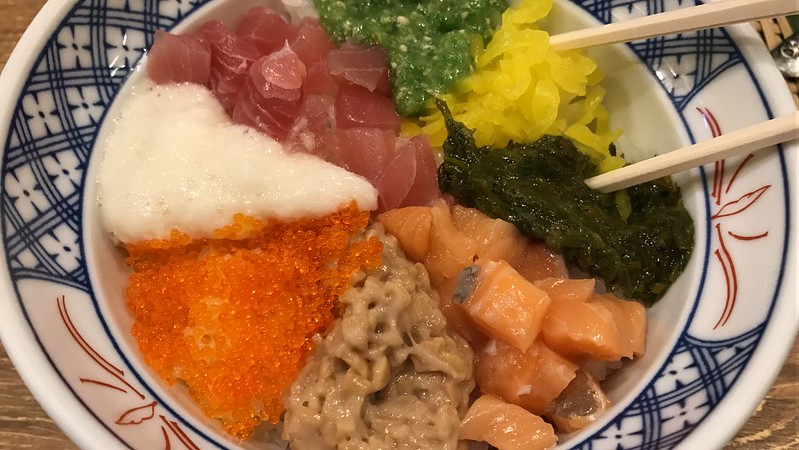
Beautifully presented sushi platter in Asakusa, Tokyo
Breakfast Sushi, anyone? Fresh, raw fish for breakfast tastes surprisingly good!
What is even more remarkable is that the quality of food is the same everywhere. You can buy a chicken sandwich, or a lunch combo with soup and a piece of fish and pickled veggies from a roadside convenience store or from an expensive restaurant, they will taste the same. The restaurants only offer much more variety and ambiance at much higher prices. As soon as I discovered this I started having excellent meals in my hotel room that I bought from roadside convenience stores. A meal of four small sandwiches (egg salad, tuna, roast beef, and Japan’s unique strawberry and cream sandwich) and a small salad and a small pastry will be about 8 dollars and everything will be super fresh and taste great! A meal like that in a proper restaurant will cost at least twice as much.
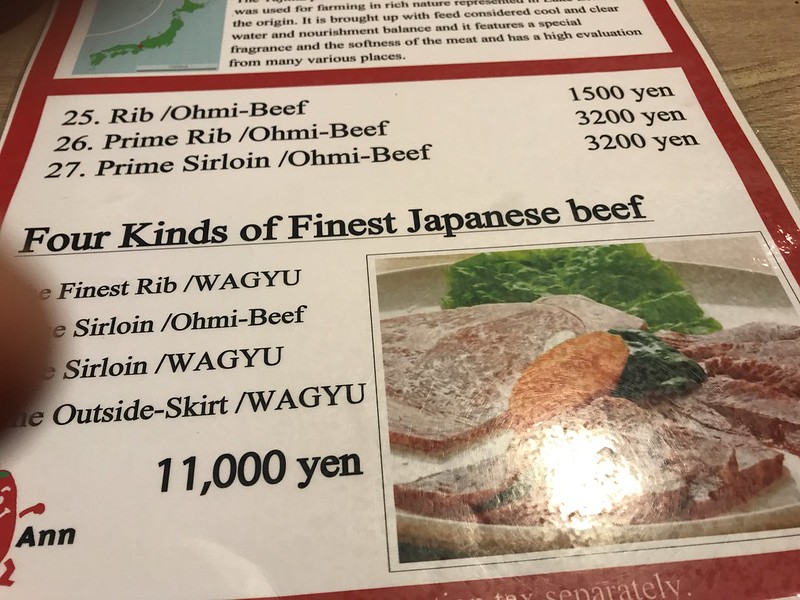
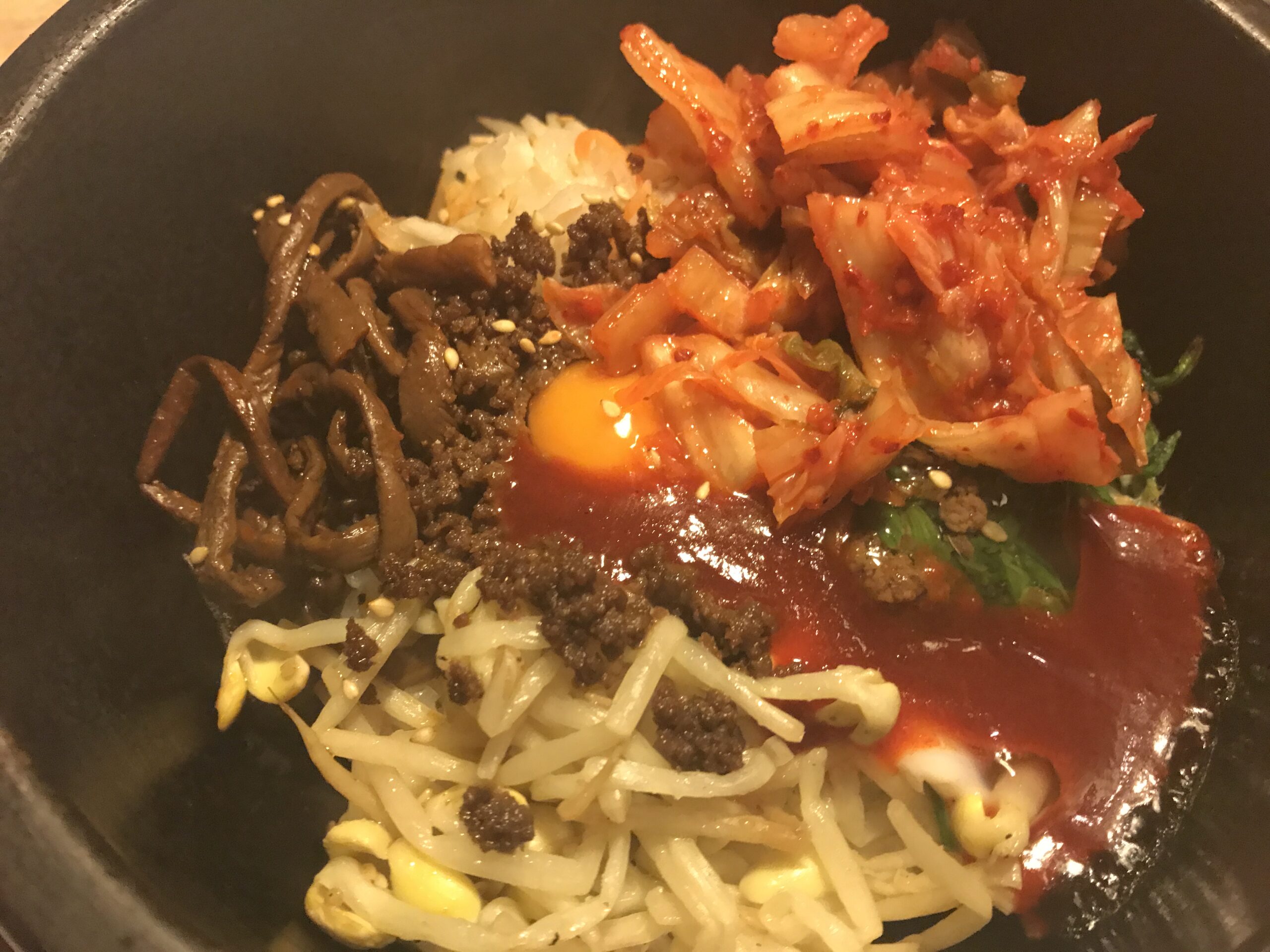
Talk about ambiance in fancy restaurants, the menu shown above includes Wagyu beef, the most expensive beef in the world, at just 11000 yen per serving (that’s about $110, or 8400 rupees !!) I did not eat this, could not force myself to spend so much on one meal. Instead I ate Bulgogi
Korean Bulgogi (beef) – cost about 10 dollars – very tasty!
The Japanese are very innovative about service in restaurants – some of these are now being implemented in other countries.
You may have seen or visited the rotating wheel restaurants where freshly prepared food items are loaded on to the conveyor belt. You grab whatever you like. This lets you taste many small items.
Another way is online menus at the tables, your order reaches the kitchen online and delivered to you by the waiter. I have seen this in USA during recent years. Still another way is to look at the menu items at the entrance, order and pay at the machine at the gate and get a receipt. When you are inside, your receipt gets you the food you ordered already.
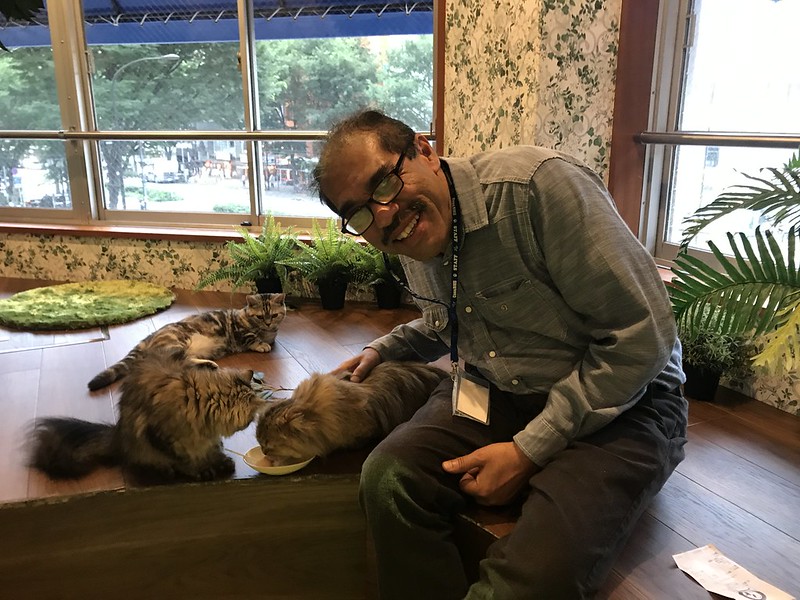
Then there are specialized places in entertainment districts. Apart from the ubiquitous Karaoke bar, there are Robot cafes, Anime cafes, Maid cafes, and so on. And finally cat and dog cafes where you can hang out with your favorite animals and have a latte at the same time. I tried the cat café, and loved it,
You can not finish a discussion of Japanese food without discussing their vending machines. Yes, they have scores of beverages and snacks instead of only a handful in USA or Europe. You can also get prepackaged food and freshly cooked food in some machines that are supposedly very good. And machines are everywhere including at the street corners.
I did not try the food, but I tried all kinds of weird drinks and liked some of them( my favorite : Pokari Sweat Water – yes sweat water!!)
No drugs, no crime, decent food , excellent transportation and entertainment options, and decent salary and job security even for low level jobs – the Japanese have quite a high standard of living indeed . Apartments, like hotel rooms, are tiny but clean and efficient – and outside Tokyo, they are not that tiny! Healthcare coverage is a lot less comprehensive for working adults in recent years. On the other hand, for many seniors, health care coverage has been so excellent that many people of 100+ years continue to roam the streets, which results in some obvious social problems of depression, abandonment and loneliness.
Seniors
Talking about senior citizens, I thought I was in decent physical shape for a man in my mid-sixties. The Japanese senior brigade put me into deep shame. I have never seen so many old folks with flat stomachs and ramrod straight posture, hiking, biking, exercising and playing sports (and apparently, having sex too) in their sixties, seventies and eighties! Some of them work in their mid-eighties, not for money, but to spend time!!
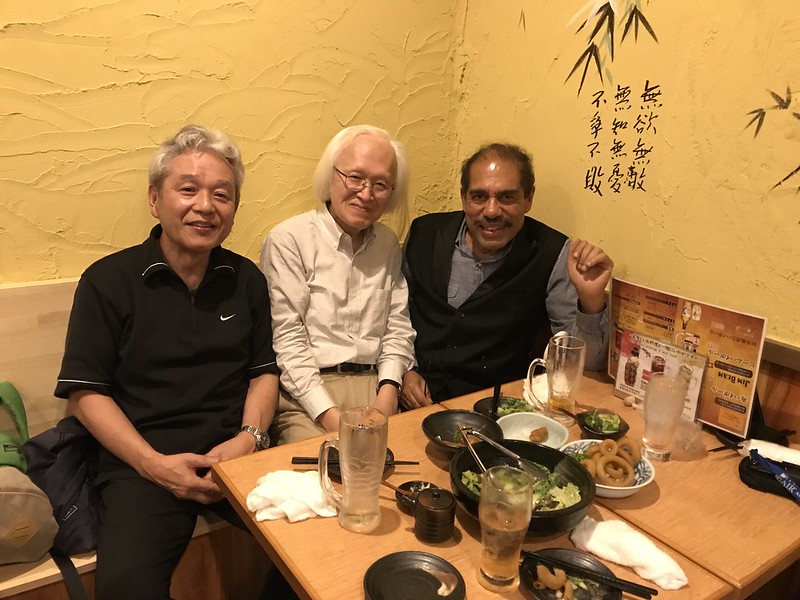
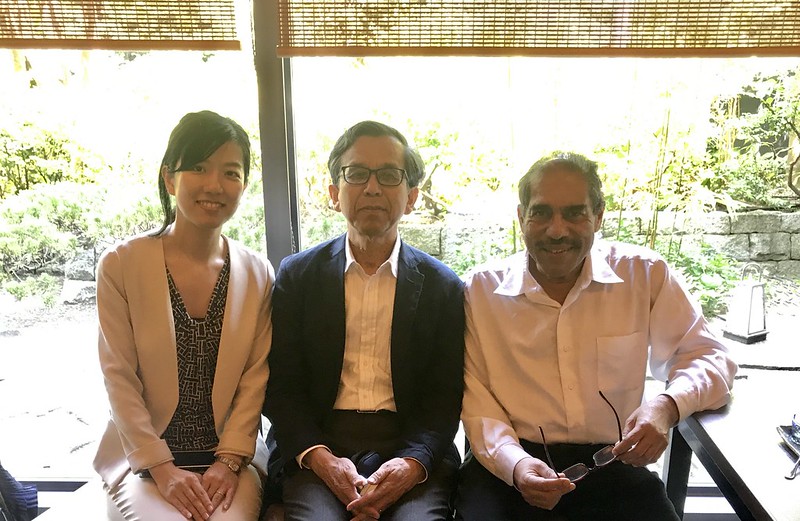
I enclose two pics of my classmates in Rochester that I met after 38 years. the man with his daughter is Dr. Fukiharu, the guy with white hair is Dr. Kodaira, and the other guy is Dr. Takahashi
OUTSTANDING Parks right in the middle of big cities:
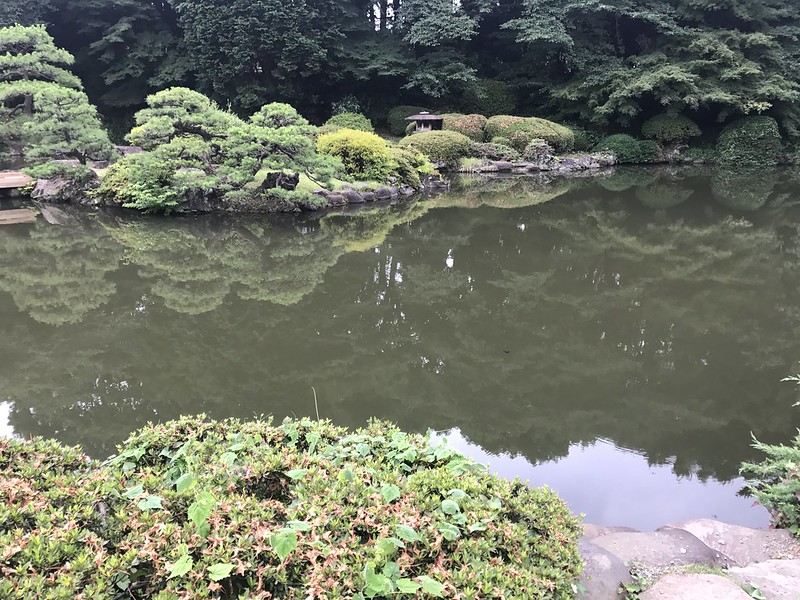
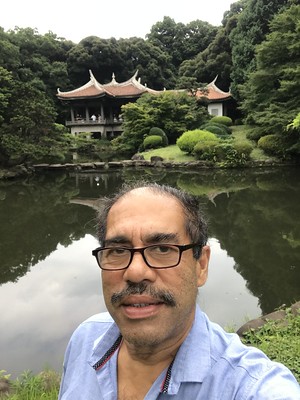
Huge parks and gardens with amazing landscaping that generate a sense of peace and tranquility. Almost every temple has a garden or a park adjacent to it that I found sometimes more appealing than the temple itself.
I am indebted to Dr. Nadeem Naqvi for some lively discussion which led to the first draft of our joint paper and for graciously allowing me to use the material from our joint paper. I am also indebted to Dilobar Kassymova for providing research assistance.
In my classes, I sometimes show off different categories of economists (boasting that economists are not all dull and/or socially awkward!). I show them handsome economists (yes, they do exist!) athletic economists, superrich economists, transgender economists and many others. The most fun I have is when I show them a “clueless economist”!
Let me explain !
In mid 1990’s, a young researcher from Princeton wanted to test whether competitive markets in real life exhibit a uniform price (Graddy (1995)). She picked New York’s Fulton Fish market – a large wholesale fish market – selling mainly to restaurateurs and grocery stores, where a large number of independent stores operated from the same premises. Collecting a lot of data on sale prices and quantities and running several statistical tests, she found that the prices overall are the same for the same quality of fish. A little annoying item was that she found one ethnic group, Asians (and Koreans in particular), who were systematically discriminated favorably, meaning they usually paid a lower price than others!
It was a competent piece of research. However, the FBI took a keen interest in her research , they were already investigating Fulton Fish Market for collusion and other organized crime related activities! A little later the FBI accused the sellers of collusion, and soon afterwards the entire fish market mysteriously burned down, with all their records totally charred! (NYtimes (1995))
The reality, as I see it now, was that all the wholesalers were tightly controlled by organized crime, prices were not competitive but reflected almost perfect collusion, and the unfortunate Asians (Koreans) that bought cheaper fish were owners of inner city grocery stores in NYC area – they were paying protection money to the aforementioned organized crime group – so they got a little break on the fish prices!
I am sure the reality became obvious after the market burned down in 1996. Indeed, she mentions the involvement of organized crime in her later writings. And of course, I would speculate that she was not totally unaware of this at the time the data were collected and the paper was written (circa. 1991-93). But only the Federal Bureau of Investigation had inside information on this, not an academic economist.
Indeed, even in a market economy, sometimes things appear to be very different from what they really are.
When applying game theory to analyze equilibria in a more complex economy, the possibility of appearing to be clueless is a lot more serious. In a subgame perfect equilibrium, credible threats are usually not executed, so one might construct an incorrect hypothesis where credible threats are absent altogether. In political economy, where complex social and economic interactions are studied, one usually finds policy makers and academics who are blissfully naïve (and clueless)
My colleague, Nadeem Naqvi and myself have been perplexed by the “Stans” – we have been working in one of them for the last few years. On the surface, these “Stans” and other off-shoots of the Soviet republic are doing fine. Some have more resources than others. The BANK and the FUND periodically publish research monographs about foreign investment, business environment, GDP growth and other key economic indicators – assuming, erroneously, that these are budding capitalist economies. There is a steady stream of econometric work trying to predict efficiency of different monetary policy instruments and fiscal stimuli to promote economic growth
But the reality is, these are all “network” states, the “network” being a combination of government officials and others in power. Fiscal and monetary policies have superficial, at best marginal effectiveness in these countries.
The network state collects tributes legally by taxation and illegally by other means from business enterprises. They wield the threat of confiscation or loss of services. In return they provide order which is a combination of infrastructure and protective services. These are the important instruments, not traditional economic policy!
However, the “Stans” are not collapsing en masse, like the Soviet Union did. Indeed, some “Stans” are doing better than others. Some exhibit moderately high rates of growth and considerable private investment and business activity, whereas others only have the basic retail and other non-traded goods provided by the private sectors ! Is it because of their resource base? Or is it an outcome of a more complex game? Clueless we might be, but since we know some game theory, we tried to build a theory of “Stans” to show why some of them are more vigorous than others.
A little background here:
In the 70-year lifetime of the Soviet Union (1922-91), (i) there were virtually no property rights by which individuals had to live, largely because there was extremely limited private ownership of property (beyond one’s own autonomous labor), (ii) other than sale of labor time (hours or days for which labor power was sold), all other sources of income for a household were effectively prohibited, (iii) there were no businesses that households could buy and sell, nor of course any stock markets in shares of private firms, and (iv) there was no developed real estate market.
This was radically different from the economic base (of the relations of productionand the associated inter-household distribution of income) on which the capitalist economic systems of the world were organized at the time. Moreover, resting on this economic base in the Soviet Union, the entailed legal and political superstructures pertaining to individual rights over property were virtually nonexistent. This is a huge contrast with the successful capitalist countries, in which the legal structure dealing with property rights was firmly in place, and there were political institutions that collectively were in continuing support of such rights under the law.
By 1991, there was rebirth of fifteen post-Soviet countries, and in these the corresponding collective consciousness of the people was nothing like that in the successful capitalist countries.
What kind of progress have the Group of 15 made towards the state’s provision of greater protection of property rights of individuals, especially to the businesses they give birth to and nurture into successful and profitable enterprises, simply because the greater such protection, the more fertile (profitable) will be the domain of the economy over which private business investment will be made in larger magnitudes, and in higher-return ventures? The larger the annual private business investment, the faster is the rate of growth of the economy’s capital stock, to which corresponds a faster rate of growth of real GDP. To avoid the fate of the late Soviet Union, these countries must adopt a path of economic growth supported by private investment. The data available in these countries are not entirely reliable, the data on private sector capital formation is not available for some, in others it fluctuates wildly. Further, sometimes the network state embarks on a “prestige” project and private investment occurs as an ancillary to this project. Once the project is completed, private investment goes down substantially.
A snapshot of the Group of fifteen, 2016
GDP Per Capita
Gross fixed capital formation, private sector (% of GDP)
GFCF as % of GDP
Country Name
GDP per capita 2016 ($)
2012
2013
Lithuania
29972
Not available
Not available
Estonia
29313
Not available
Not available
Russian Federation
26490
17.6
18.5
Latvia
25410
Not available
Not available
Kazakhstan
25145
25.7 (in 2006)
not available
Belarus
18000
30.1
32.6
Turkmenistan
17485
10.5
not available
Azerbaijan
17439
11.8 (in 2007)
Not available
Georgia
10044
17.5
16.9
Armenia
8621
22.2
19.4
Ukraine
8305
17.2 (in 2009)
not available
Uzbekistan
6563
17.5
18.0
Moldova
5328
22.6 (in 2006)
Not available
Kyrgyz Republic
3521
24.1
22.9
Tajikistan
3008
4.0
5.5
Data on GDP and GFCF from various UN publications
It is clear that in terms of GDP per capita, some of these countries have performed a lot better than others. The data on Gross private capital formation is not satisfactory, but again we can see a large difference in these numbers between the group of fifteen. Several other countries in East Europe, Asia and Africa, may also satisfy our criterion of network states.
Gross capital formation as a percentage of GDP varies wildly, ranging from 4% in Tajikistan to about 30% in Belaraus and 25% in Kazakhstan. (for comparison , GFCF is about 15% in USA which has a very large capital base, but it is about 40% in China and 25% in India) Why is it that some network states are more successful in promoting private investment than others. Is it only because they have more natural resources. Or is the reality more complex?
We applied a little bit of agency theory to look at a game between the “network” state and the agents who may be “qualified” or unqualified”
2. Model
The government (network) provides legal order S and collects revenue (tribute) T. Order includes infrastructure for enterprises plus a threat level for confiscation. This is essential for collection of tribute.
To sustain high return enterprises, the government must provide an order level sH while the level of order needed for a low-return enterprise is sL. There are two types of agents:
“Qualified” – who either possess human capital or resources or have enough “network” connections to operate high return enterprises. They earn more from high return enterprises
2. “Unqualified” who earn more from operating low-return enterprises.
An unqualified agent may not be interested in operating a high-return enterprise, whereas a qualified agent has a choice of operating either a high-return or a low-return enterprise.
The objective of my exercise is to see under what conditions the equilibrium outcome will involve a situation where both high and low return enterprises are operated by the agents in the economy. This equilibrium is called a “productive” equilibrium. The other equilibrium is called a “stagnant” equilibrium because only low-return enterprises exist here, operated by both qualified and unqualified agents.
The payoff (surplus) from operating a high return enterprise by a qualified individual is
V = max [U(θ, S ) – T]
Where θ is the agent type (θQ qualified, and θU unqualified), sL is the order provided to low-return enterprises and sH is the order provided to high-return enterprises, and T is the tribute that must be paid to the government (tL to operate a low-return business, and tH to operate a high-return business).
Thus, if a qualified agent participates in a high return enterprise, his return is
VQH = U(θQ , sH) – tH
If he participates in a low return enterprise, his return is
VQL = U(θQ, sL) – tL,
Therefore he will choose to invest in H if VQH > VQL , and in L otherwise.
An unqualified agent, I assume, has a very low (possibly negative) return from investing in a high quality enterprise, so his return from investing in L is
VUL= U(θU, sL) – tL,
He will invest if VUL is non negative.
The main point of distinction between qualified and unqualified agents is
U(θQ, sH) – U(θQ, sL) > U(θU, sH) – U(θU, sL),
which implies that the qualified agents have a higher differential payoff between high return and low return enterprises.
The government maximizes a convex combination of the cost of providing order and the revenue earned,
G = – a[C(sL) + C (sH)] + (1- a)(tL + tH)
where a is the weight placed on the costs. Here G is the government’s objective function.
By assumption, it is more expensive to provide sH because it needs better infrastructure and possibly higher level of coercion so that greater revenue could be generated from the high return enterprises.
2. Equilibria
We look at three possible equilibria (scenarios). The proofs are in my joint paper with Professor Naqvi (Bhattacharya and Naqvi (2017))
1. The government provides only sL, enough to sustain low-return enterprise only. It is not profitable for the government here to provide sH, the revenue generated is the entire surplus of the agents (or the minimum surplus if the unqualified agents are diverse). This is the stagnant equilibrium. Here, the government does not find it optimal to provide sH because qualified agents will continue to choose low-return enterprises because for them the additional net return from operating higher return enterprises is negative.
2. The government provides both sL and sH, and collects different revenues tL and tH from different agents. Here, qualified agents choose high-return enterprises and unqualified agents choose low-return enterprises. The revenue earned tL is equal to the surplus of the unqualified agents – thus the unqualified agents are left with what we call only “normal profits”. The revenue earned tH from the high-return sector is less than the surplus of the qualified agents, because they self-select to operate high-return enterprises. So the qualified agents earn more than “normal profits”. This is the productive equilibrium.
3. The third scenario occurs where the government provides only sH and extracts all the surplus by collecting tH. Here, the low-return enterprises are not functional. We call this a “Highly-productive” equilibrium. This type of equilibrium will not exist if there is a large number of unqualified agents in the economy, or if it is not expensive for the government to provide order level sH. Thus, this is the kind of equilibrium that a society should strive for under improved governance and availability of opportunities.
For the kind of economies we are considering here, this equilibrium is unlikely to exist because there is likely to be a large number of unqualified agents who will find operating a low-return enterprise profitable even if their surplus is close to zero.
3. Remarks
1. What exactly happens in “stagnant” equilibrium?
This equilibrium is achieved as an outcome of voluntary interaction between a government which provides order and infrastructure and agents who decide to operate enterprises that they find profitable. In this equilibrium, although there are many qualified agents, they self-select to operate low return enterprises because the return from doing so is higher than operating high return enterprises. The government provides only order level sL because provision of sH is redundant in this case.
2. What exactly happens in “productive equilibrium”?
When is the productive equilibrium likely to exist? In a productive equilibrium, qualified agents operate high-return enterprises and unqualified agents operate low-return enterprises. Naturally, the level of private investment will be higher in this equilibrium.
I have proved that this equilibrium will exist when the proportion of qualified agents is neither too small nor too large. As we mentioned before, it is unlikely to be too large, so “not too small” is the relevant criterion. This proportion depends on the level of human and natural resources at the disposal of the agents and size and strength of the “network” in the economy
The second result I prove is that the productive equilibrium will exist when going from low to high order level increases surplus proportionally more for qualified than for unqualified agents.
4. More Remarks
We observe, in Central Asia, Eastern Europe, in south Asia and in Africa, different kinds or regimes where appropriation is the norm – both regimes with relatively vigorous economic activity and regimes with relative stagnation. This formulation might shed some light on why some regimes appear to be more stifling than others.
Did I just present you with a well-disguised tautology? Possibly!
So let me check again – what exactly is the implication of all this?
Basically, even in a network society, agents do not curl up and surrender all surplus to the network. Nor does the network brutally destroy the society. The outcome depends on the proportion of agents who are educated, connected to the network, and willing to take the risk of eventual confiscation of appropriation of their entire investment. If enough of these agents exist, and the network finds it not too expensive to provide the right infrastructure for high return enterprises, then the economy will exhibit a productive equilibrium where substantial private investment may occur. On the other hand, if this proportion is small, the network state will only build an infrastructure to support low-return enterprises. In a country like Tajikistan, for instance, private investment and economic activity are on a much subdued level than the relatively successful “Stans”. Each of the countries in this group has a varying amount of natural resources that they can export. But for sustainable growth, they all need development of vigorous economic activity. My model indicates that the proportion of qualified agents, and the “network’s” willingness to provide a higher level of infrastructure and property rights are some of the key elements for sustainable growth.
REFERENCES
Bhattacharya, G. and N. Naqvi, (2017), “A Theory of Appropriation under Self-selection by Agents” Mimeo. KIMEP University, Almaty, Kazakhstan.
Graddy, Katherine (1995), “Testing for Imperfect Competition at the Fulton Fish Market”, The RAND Journal of Economics, Vol. 26, No. 1 (Spring, 1995), pp. 75-92
3.Fire Sweeps Through Major Building at Fulton Fish Market
After writing Part 1, my economist friend, Dr. P brought to my attention Dixit’s book on “order and lawlessness”.
Dixit talks about “order without law” and gives an example of Indian traffic as a situation where order is apparently accomplished without anyone seriously paying attention to the laws. Dixit was not seriously analyzing India’s traffic situation, and his example is a good one for econ textbooks.
But come on ? ORDER? Freaking order? On Indian streets? No sir! What we have is a miserable feasible solution to the traffic quagmire every day, created by absolutely moronic lawlessness practiced by everyone on the road and everyone suffering from serious mental anguish and often physical harm from this wretched state of affairs. This feasible solution comes at a huge social cost!
What social cost, you may ask! I say, open your eyes: Non-drivers and/or people who have never been abroad find it difficult to comprehend the veracity of this social cost, but they bear it regardless.
There are four kinds of streets in Kolkata – (apart from restricted highways meant only for cars)
Arterial streets like Central Avenue, Rashbehari Avenue etc,.
Main roads , with bus and truck traffic along with other vehicles.
Side streets with shops , bustling with traffic (cars, taxis and vans and two and three wheelers) , but no buses or trucks.
Residential streets without shops that are not perceived as shortcuts to any of the side streets (I will call them “little streets”)
Arterial streets actually have more orderly traffic and sidewalks,
But on main roads and side streets, are you worried to walk as a pedestrian? Of course you are!
Social cost #1!
Can you walk to visit others or to shop or walk to work to a place two to five kilometers away? Even though you may be in good health for walking, you are annoyed or scared by the traffic and the noise and you refuse this easy way to get some exercise. In many countries of the world , not only in venerable Western Europe, but in Eastern Europe, lowly Central Asia, crowded south East Asia, Japan, Korea and populous China (yes in modern Beijing with its wide boulevards and humongous sidewalks),and in many other places, you can walk to go shopping or visit friends or go to work, and get some free exercise! Never in Kolkata or Delhi! People drive their cars or motor bikes to go to parks to walk !
Social cost #2!
Noise from Horns
This noise is found to be very annoying to most people. If you go to a village in India or go abroad, your ears are stunned by the silence caused by lack of incessant honking. While some drivers in India are pathological honkers, most use their horns frequently to survive on the anarchic city streets. Honking is primarily defensive and necessary for survival – you come to any intersection, you honk; you pass another car, you honk so he does not sideswipe you; you are taking a right turn , you honk so that oncoming traffic is aware of you. And of course, if you yourself are breaking traffic laws, you honk really loud – if you are passing a vehicle on the left you honk loudly, if you are passing a pedestrian or a bicycle by a margin of 12 inches, you honk loudly so that he does not suddenly move to the right and die from your vehicle hitting him; if you are zooming out of a busy intersection on the wrong side of the road, you honk super loud to save yourself from about fifteen accidents that were going to happen in the next ten seconds!
So honking is necessary in a world of idiotic and lawless driving and everyone is delighted by the incessant noise (just kidding!)
Social cost #3!
Semi-Skilled people can not utilize their skills.
Really, a well-trained monkey can drive a modern automobile with an automatic transmission! That’s the whole point with modern technology. Microwave makes cooking (at least some part of the cooking process) easier, again a monkey can operate a microwave. Ipads make browsing easier, again a monkey can work with it! Modern technology enables average people to handle complicated machinery, we all benefit from it. In the rest of the world average people can safely drive themselves from point A to B, without fear of getting mauled or traumatized. Not in India! I am an average driver of cars who has driven about 800,000 (that’s eight lakh kilometers) during my time in the USA, and I have driven in Manhattan in New York , on 12 lane super highways in California , and on winding mountain roads in the Rocky Mountains, but I shake and tremble at the thought of driving on busy Indian streets. Plus I will need to pay a skilled driver to drive my car. All because of idiotic and lawless driving!
Social cost #4,5,6,7,8 … described below
Delay in commuting, caused by unnecessary traffic jams caused by idiotic and lawless driving.
Fear of accidents, caused by idiotic and lawless driving
Lack of freedom for small children, they can not be trusted to walk on the streets alone, caused by idiotic and lawless driving
Accident victims and heart attack patients succumbing to their ailments because of delays in going to the hospital, caused by idiotic and lawless driving
Terror from walking on the side streets because of roaring motorbikes approaching or driving around, caused by idiotic and lawless driving.
And the list goes on.
Finally, the drivers themselves bear an enormous amount social costs. Just ask, if you will, a driver of a front-heavy three wheel vehicle, like the one carrying gas cylinders, machinery , or food . Those are actually very difficult to operate and the drivers are terrified at all times. The bicycle riders like myself are scared to death every day . It took me about three months to reclaim my forgotten skills to maneuver a bicycle on Kolkata streets. After riding for about two years , I decided to give up riding on Arterial streets or main streets (with bus and truck traffic) altogether. I now only ride through side streets and little streets. The reason is a simple calculation of probabilities:
On an arterial street or a main street, probability of death or mutilation or broken bones from an accident is significant and positive every day, while on a side street or a little street, that probability is very small.
On an arterial street or a main street, probability of laceration, bruises and mangled bicycles from an accident is significant and quite high every day, on a side street or a little street, that probability is merely significant and positive.
I ride for exercise, so there is no time constraint, and I feel reasonably safe on my well-calculated routes, which include mostly left turns and mostly little streets. But there are thousands of bicycle riders everyday on Kolkata streets that live with these odds, because of idiotic and lawless driving.
And I have talked to taxi drivers and truck drivers in India, they are constantly terrified of others, yes even those that break traffic rules constantly are terrified of others breaking traffic rules. They actually feel a lot relaxed on the restricted access highways , but there are only a few miles of those in Kolkata.
So what we see in big cities of India is persistence of idiotic and lawless driving which induces the social Nash equilibrium that is the anarchic appearance of order. A little bit of cooperation among drivers or serious enforcement of laws by a third party will reduce all these costs that I mentioned above- isn’t that something to think about?
I simply point out the cameras that have been installed at major intersections in Kolkata. Accidents from vehicles running red lights have almost disappeared at major intersections like magic, but they still exist at the minor ones without cameras .
Please note that I refrained from discussing health care cost for accident victims , but that is of course part of this social cost.
How did all these evolve? That’s a complex question, I will attempt to answer it in part 3.
Still dangerous in Kolkata!
P.S.
From Hindustan Times
“A total of 151,113 people were killed in 480,652 road accidents across India in 2019, an average of 414 a day or 17 an hour, according to a report by the transport research wing of the ministry of road transport and highways.
India continued to have the most road fatalities in the world, followed by China, a distant second at 63,093 deaths in 2,12,846 road accidents in 2019, the report revealed. The United States of America (USA) reported the most road accidents at 2,211,439, and witnessed 37,461 deaths in 2019.According to the report, speeding was the leading cause of deaths, while, in terms of vehicles, two-wheelers were involved in most road fatalities.”
“Two-wheelers were involved in 37% of the road deaths in the country, followed by pedestrians at 17% and light vehicles (comprising cars, jeeps and taxis) at 16%. A total of 56,136 people riding two-wheelers lost their lives, while 25,858 pedestrians died in 2019″, stated the report.”
See I was correct about drivers of two wheelers with alleged magnum male endowments and minuscule skills in other areas
Traffic in India is insane, insanely hilarious, insanely annoying and insanely frustrating.
If you have not driven anything in your life, you will not fathom the deep insanity of Indian traffic. A non-driver sees traffic as a flow of assorted vehicles , either smooth and orderly, or abrupt and noisy, or engrossed in snare and chaos. To him or her, the snare and chaos will appear to be the steady-state of Indian traffic. However, only a driver will understand the true terror and lawlessness that engulfs Indian traffic twenty-four hours a day (yes even late at night!).
Even more amazing are the social norms about traffic held by drivers and non-drivers alike in India:
Drivers need to be smart and talented in the art of driving.
Any empty road surface is accessible to any vehicle on the road.
Complicity with all the traffic laws will endanger your life anyways, because others will be angry and destructive towards you.
Playing chicken is good, specially when you are plying a motorized vehicle!
Hit and run after any accident is not necessarily a criminal activity (well, it is, in every country of the world, including India – for even minor accidents – punishable by jail time, severe penalties, and suspension of license – yes even in India!)
Equally amazing are the beliefs about traffic shared by drivers and non-drivers alike:
Traffic is more orderly in North America and Western Europe, anywhere else in the world it is similar to Traffic in India, only a tad more or less crazy!
(Fact: I have been to countries like Kazakhstan in Central Asia, Thailand, Cambodia and Malaysia and Singapore in South East Asia, Dubai and Oman in the Middle East, and Japan and China and Hong Kong in the Far east, and believe me, traffic is not nearly as crazy as in India – not even close! Assuming traffic is the same in the entire Indian subcontinent, it is crazy on an elevated level in India and our neighbors)
Speed limits are only relevant for highways monitored by cameras only. If you own a motorcycle and firmly believe that you have a stupendous magnum penis, then you have the right to drive at any speed in small side streets, terrorizing pedestrians and other traffic as long as you use your horn frequently. Such beastly behavior will impress your male friends and bring forth quasi-orgasmic approval from all the females who happen to witness this spectacle.
Right of way? WTF is that? A legal term enabling senior citizens and young women to move around as they please without getting mugged or raped? A new brand of deodorant? A new dating app, perhaps?
Yield? What? Yield to what ? To whom? You mean to a VIP convoy? To a politician of the ruling party? To a Bollywood celebrity perhaps. Or, are you talking about yielding to your spouse’s romantic advances? Oh hell yeah, it is a good idea to yield to an Ambulance because it will prevent ill people from dying on the way to the hospital. Indians are slowly learning to yield occasionally to all kinds of emergency vehicles. Are there other traffic rules about “yield” ? You have to be freaking kidding me!
And a case study!!
Let’s now do a case study of a quintessential Indian driver. His name is Ashok Dutta, my close friend. I am thankful for his habit of not reading much of anything on the internet (or anywhere else – he is a talented tabla player) –so please don’t tell him about this blog!! The first time I got alarmed about him was actually in Toronto, Canada. He and I were walking around, not even driving, in downtown Toronto, just wandering about. In any downtown in North America, there are lots of crisscrossing streets and hence a traffic light every 50 meters or so. We were walking normally, until I saw Ashok getting excited.
“Let’s get this one, come on!” He said suddenly
“Get what?” I was clueless.
Turns out he was wanting me to walk faster so we can get step into the pedestrian crosswalk before the light changes. Every time we were stopping at an intersection, we would wait a maximum of 90 seconds or less before we crossed the street. So the entire route involved waiting for the light at crosswalks for a total about 900 seconds which is fifteen minutes – at the most. After he dragged me through the sidewalk a couple of times forcing me to power walk so we can “get this one”, I explained to him that we have nowhere to go , we have all the time on our hands, and there are no hot chicks waiting for us in the guesthouse where we were staying!
The second time was even more alarming! I was driving my rental car around on the expressway in Toronto, Ashok was in the passenger seat. There were large trucks on the rood as well. Several times when I was behind a truck, the following conversation would ensue:
A: Please get the truck.
Me: Overtake?
A: Yes, please.
Me: The speed limit is 65 miles an hour. Both the truck and myself are driving at 70 miles an hour. I have to speed up to about 80 miles an hour to overtake the truck quickly. Why do I need to do that?
A: so you can see the road better if you are not behind a huge truck!
Me: hmmm. The truck is not bothering me.
Then , back in 2017, when I started spending six whole months in India , I rode pillion on Ashok’s motorbike ! Oh the horror! The travesty!
He drives on the left side of the road only when there is no traffic. If the road is busy, he is driving somewhere on the right of the middle of the road because he is always overtaking (or planning to overtake) the car or truck or bus in front of him. So 80% of the time he is on the wrong side, on a collision course with the oncoming traffic and risking a sideswipe with whatever vehicle he is overtaking. Oh yes, sometimes overtaking a vehicle on the right is not possible, so he immediately overtakes on the left, risking collision with pedestrians, bicycles, motorized carts, three-wheelers etc. who do not expect him to come from behind (because they are on their side of the street, minding their own business)
When Ashok needs to actually take a right turn, the monster reveals himself – he just takes a right turn! – no signal, no waiting for the oncoming traffic, and he enters the road on the right side while driving on the right side (the illegal side), sometimes at a breakneck speed, honking his horn incessantly. I have seen him taking a right turn in front of three cars driving abreast, coming from the other side, along with two motor bikes. He cleared the last motor bike by about one foot!
When he is not overtaking, he is riding abreast with two or three other two-wheelers in a tight space, with inches between them and at a great risk of side-swiping and crashing.
Of course, two wheeler vehicles became popular in India because of their maneuverability on crowded streets and ability to weave through traffic. To illustrate this, Ashok took me to visit my lawyer’s house through a busy market street not wide enough for cars. He told me that going through the main road will take about one hour. Through the market, he rode merrily, inches from the veggie and fruit sellers sitting on the street, my feet dangling from his bike passing about six inches away from some fishmonger’s knives, sometimes six inches from another bike’s red hot exhaust. Horns were being blown by all the bikes present, terrorizing the housewives shopping , dogs were running in fright. On the one hand, I was wanting to shrink myself to a human of about one foot in size to escape serious injury, on the other hand I was mesmerized at his unbelievable driving skills, weaving, braking, honking and creating a mayhem on that narrow street full of people, but managing not to hit a single soul or a single piece of fruit.
“There” said Ashok when we arrived at our destination “we saved twenty minutes. You are OK, aren’t you?” I was so far from being OK that all I could manage was to nod my head and he took it as a sign of approval.
There is a basic lack of apprehension on the part of Indian drivers like Ashok, you get a blank stare , a sense of total disbelief when you ask some questions. Ashok takes a very small alley near his house to go home from our place, the alley is four feet wide, just enough for a full sized bike to fit in – it saves him about 25 seconds, He told me a few times “Take this great shortcut on your bicycle when you visit us, it will save you time’” After going through it the first time, I politely refused , telling him “I am not taking that alley. Do you know little children play there? Sometimes old people walk there as well”.
His response was a an incredulous “So?” meaning “why are you telling me this ? There is no chance in hell I am going to hit someone in the alley. I am Ashok, the veteran bike rider.” I did not tell him that there is a beautiful young lady that lives close to my house – one of her eyes is gone. When she was a little girl, she shot out into the empty street and a bike came out of nowhere and hit her, the corner handle pierced her eye. Of course the rider was not our great Ashok, so it is not relevant, is it?
Yes, I told him once, when he was with his wife, myself and another friend. His wife, who hesitates to ride pillion on his bike, asked me what sort of a driver he was.
“A good driver, but he violates 100% of the traffic laws 100% of the time” I replied, causing ripples of laughter all around. Next time though I was with Ashok alone, and I told him the same thing. I could see he was deeply hurt and seriously offended. With a wry grin he told me “ I never had an accident in forty years”
“That’s great”, I said “I am glad to hear that”.
(No Accident? You freaking kidding me? He has accidents everyday!! His arms and legs have lacerations and bruises all the time, his bike parts are being broken and replaced all the time – How the hell do you explain that? Of course he has not been hospitalized with major trauma yet – what a freaking miracle!!)
What is remarkable with Indian drivers is their amazing skills at balancing, weaving, anticipating, calculating and assorted other things that are needed for driving both cars and motorbikes. Oh, the drivers also seem to have three or four pairs of eyes also, because they can always see who is about to crash into them from behind or from the sides, or if there is enough room on the road surface for their vehicle to squeeze through, or if their rear tire is about six inches away from someone else’s tire or foot, so its OK to proceed normally!! If, on a scale of one to 100, drivers in USA are about 50 on average, drivers like Ashok are about 96 at their skill level!
Not all drivers are crazy like Ashok, there are 75% drivers that are equally or less crazy, and 35% more crazy than him. Well, that adds up to 110%. Because, at a given point the extra 10% “more crazy” drivers are writhing in pain in the hospitals, or comatose from head trauma, or going to the cremation ground with their grieving family members – at least they are off the streets, finally!
In the above rambling, I have actually under-reported Ashok’s driving habits. In the second part, I will describe my venture into riding a bicycle in Indian streets and my investigation into the causes for this unusual phenomenon of traffic in India.